I just put in an advance order for the book pictured above. Partly because I’m a trifle disappointed with this:
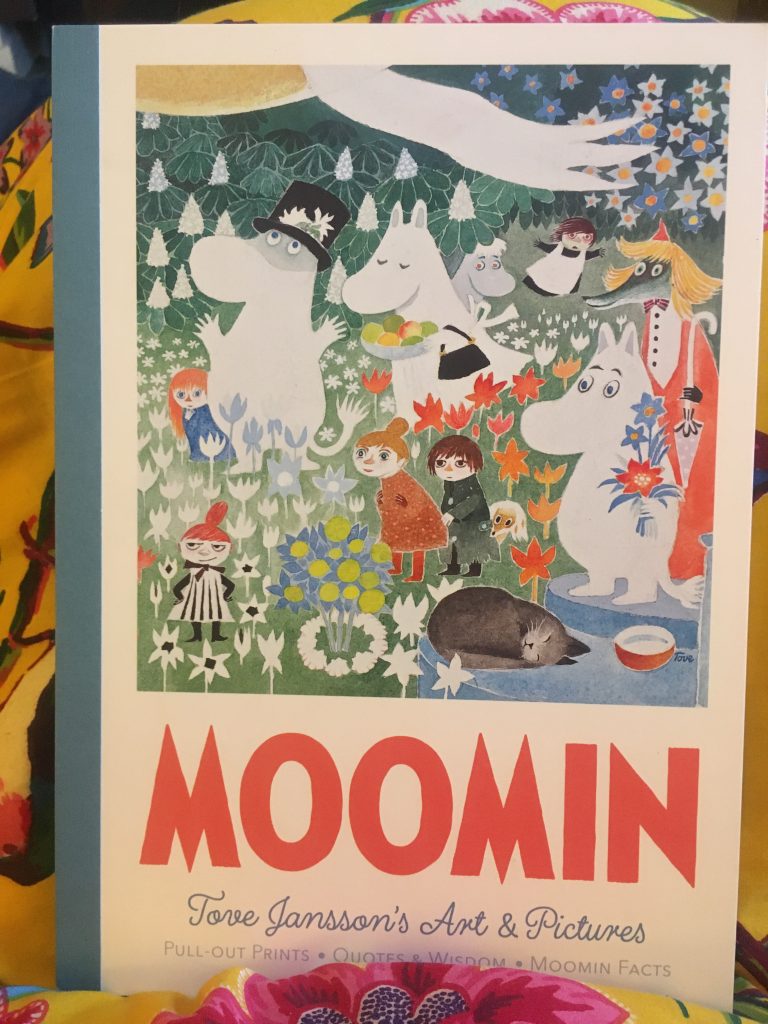
A book of removable prints.
The above is, in some respects, a thing of great beauty and loveliness. The reason I’m a tad disappointed in it is the picture selections. I adore Tove Jansson’s art. And I was hoping there would be more of my favourite images in this book.
Designed to be removable, for framing, the card stock the images are printed on is appropriately heavy. And the image quality is terrific. It’s just the selections that cause my less than jubilant feelings.
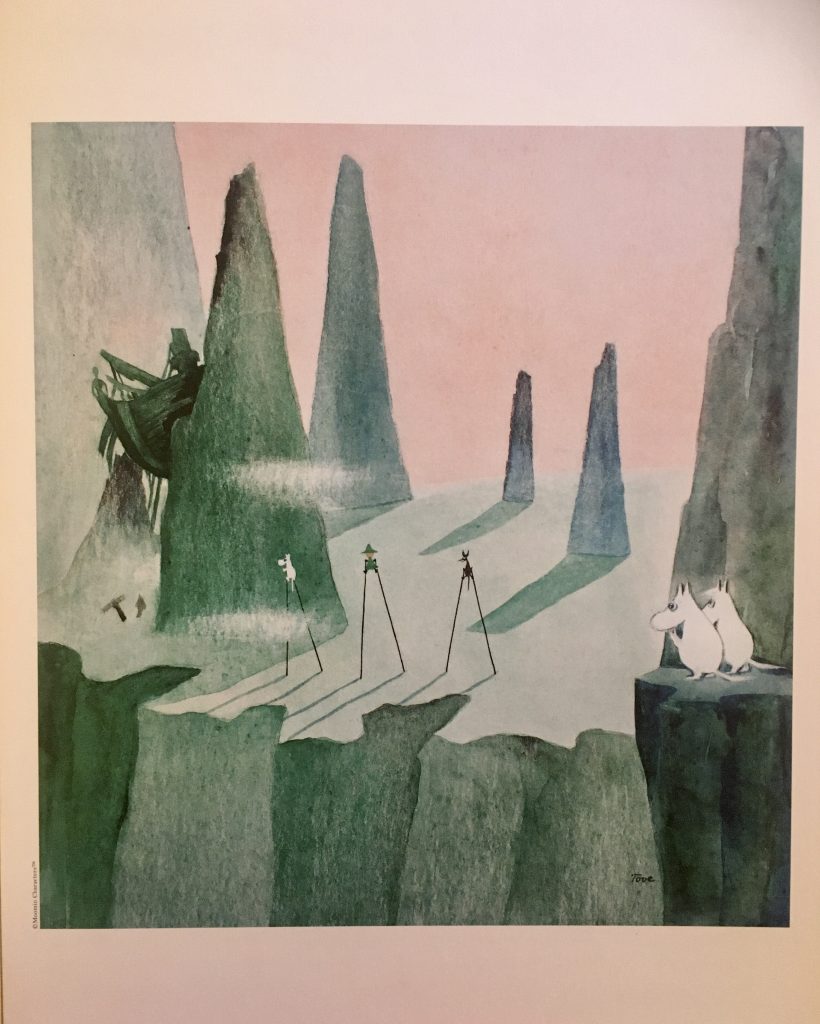
Stilt walking in Comet in Moominland.
I really hope the new pre-ordered book has a lot more of what I like best!? Of the 22 main or large images reproduced in this frame-able prints book, only one – pictured above – is from the choices I would’ve made.
Below are a few of the images I was disappointed not to find in this book:
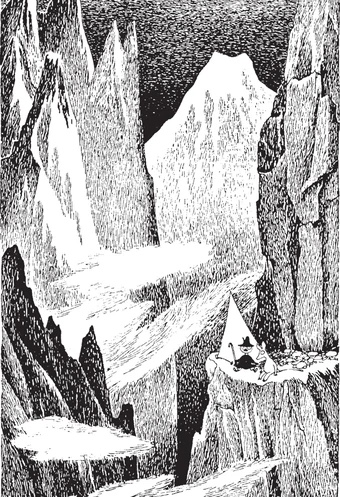
The haunting Lonely Mountains.Another absent favourite.
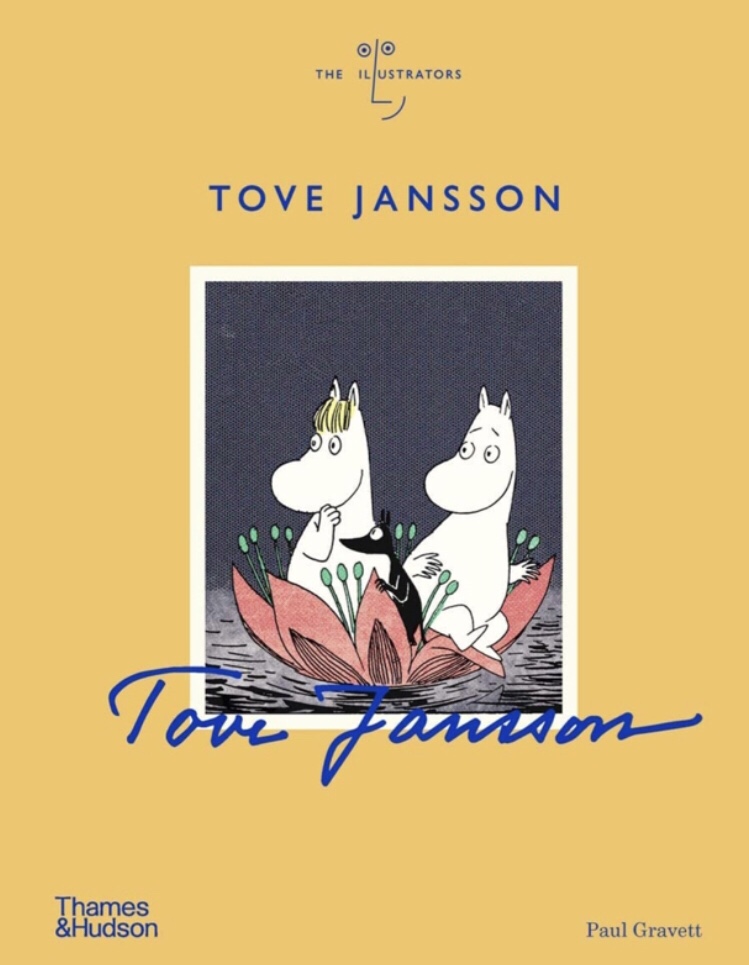
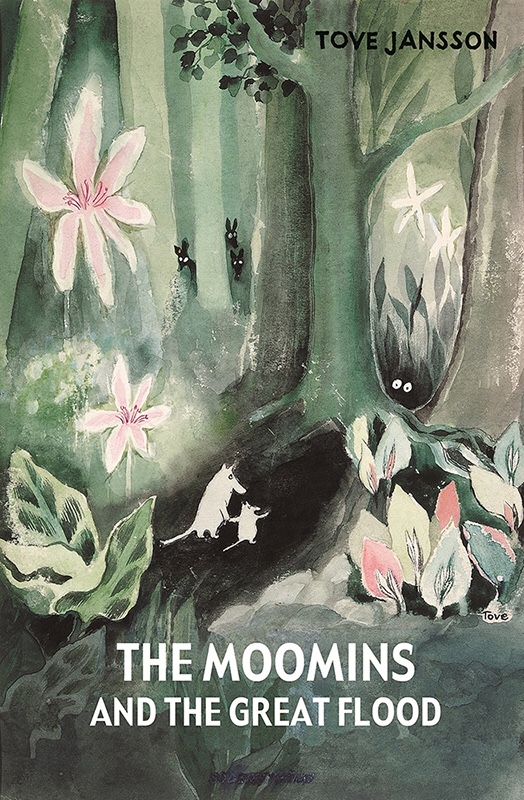
The above cover image is from a fab Jansson book, in which there are numerous lovely illustrations. Sadly barely any of which are in the book.
There are, in addition to the full size colour ‘plates’ (as they used to call ‘em!), a number of delightful smaller black and white images. But again, the dejection is not as rich as I’d have liked.
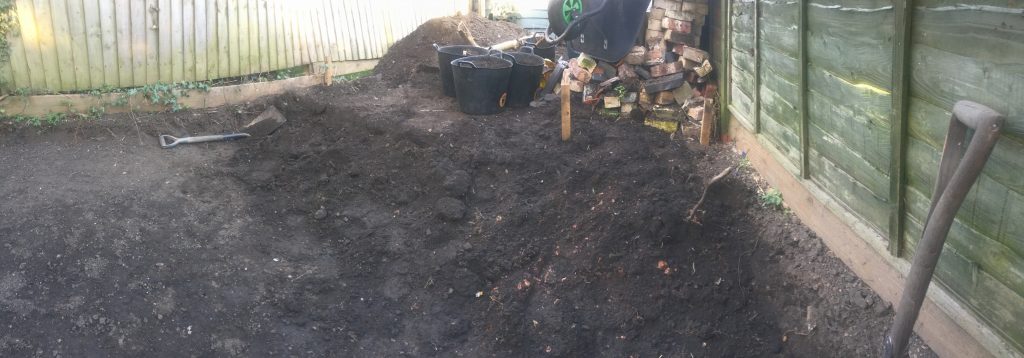
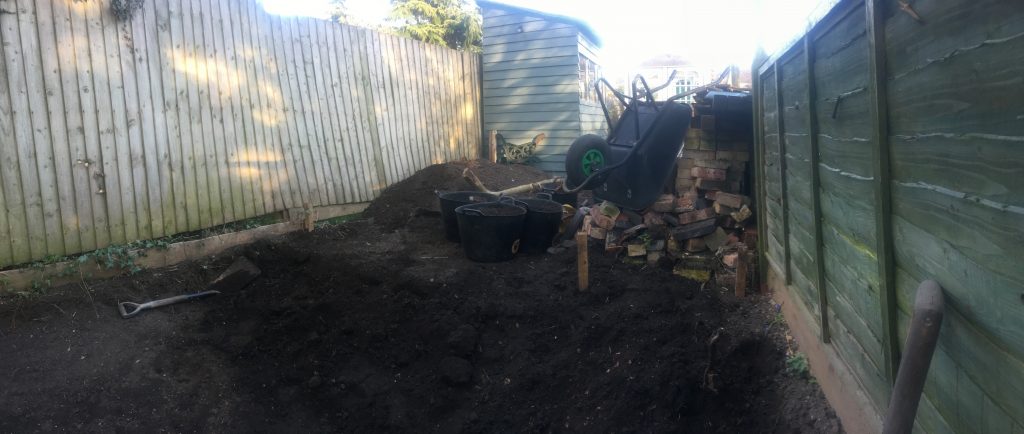
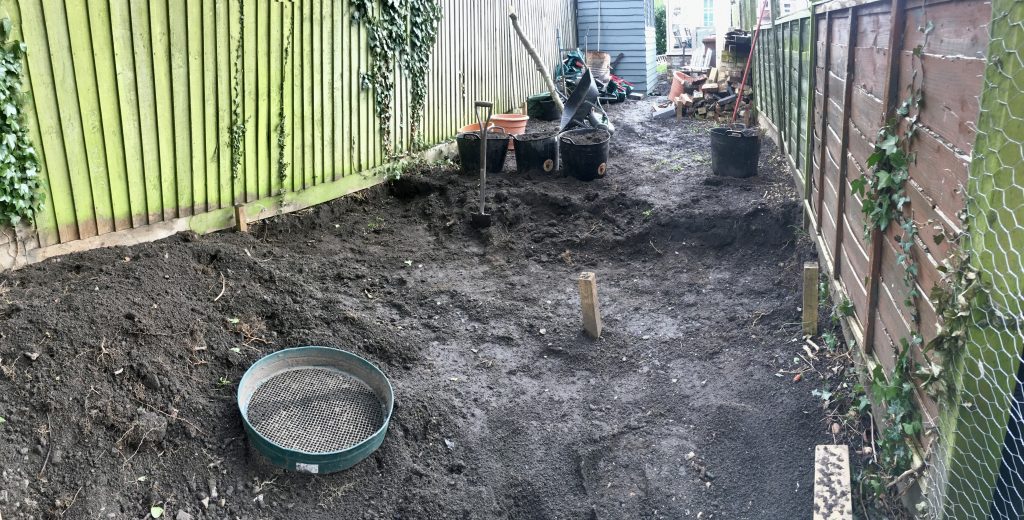
So, the ‘big dig’ solo gig continues. As of this evening I’m within one foot of completing the basic slab first scoop.
And another semi-pano’.
Using my iPhone to snap pics, even using the ‘pano’ option, isn’t great. I might get a fisheye lens, or wide-angle? Or a set with both, perhaps?
Tomorrow Chester is supposed to be neutered. But I suspect that may not happen, on account of his ‘impaired digestion’. We shall see, I guess.
I wonder how many tons of waste I’ve removed from our garden? Even just during this latest episode, it’s been a fair amount. I should’ve tried to keep track and work it out.
I suppose I can still weigh – how, I wonder? – a bucket full of earth, another full of stone, and one with weeds/plant matter. Then I could at least guesstimate.
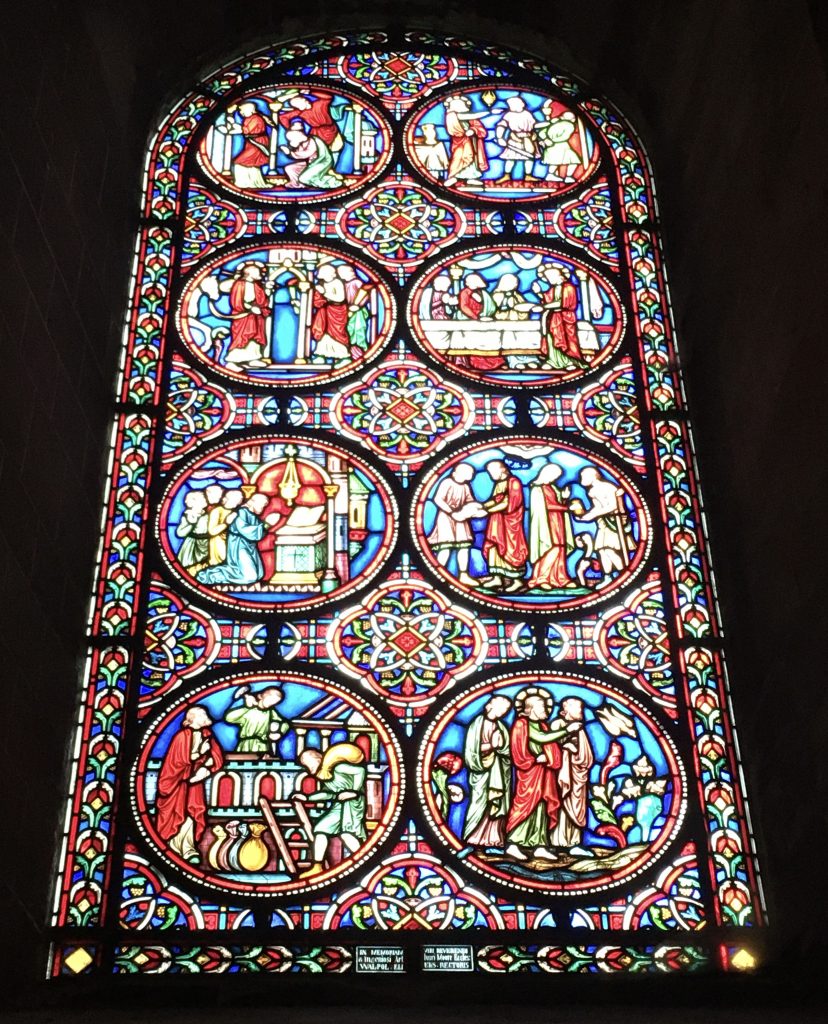
We went for a little wander around Ely, taking in the Cathedral, and Topping Books. At the latter we bought a terrific book on William Morris (more on that in a separate post).
But the largest chunk of time was given over to strolling around the cathedral, soaking up the magnificence of the architecture and its adornments.
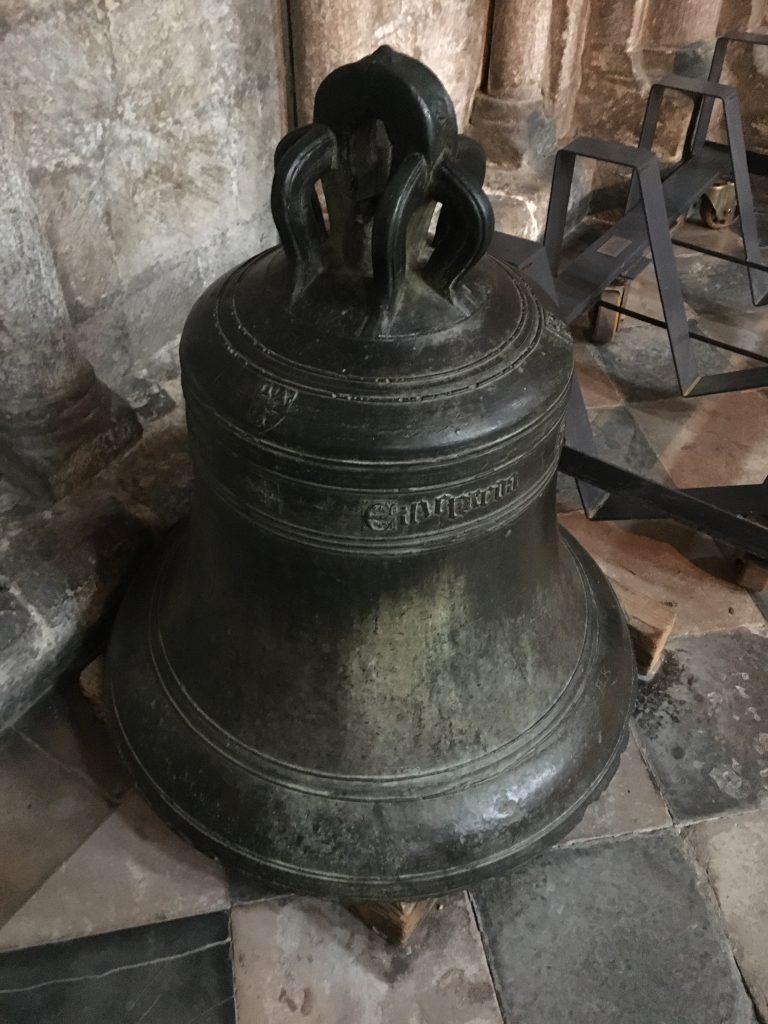
A big old bell!
The building itself is breathtaking. And inside there are countless things to draw the eye. So much that it’s easy to overlook all sorts of oddments, such as this bell, sat on the floor by a wall. It’s a whopper! One wonders how it was made, and how and why it came to be sat, silently, where it currently rests.
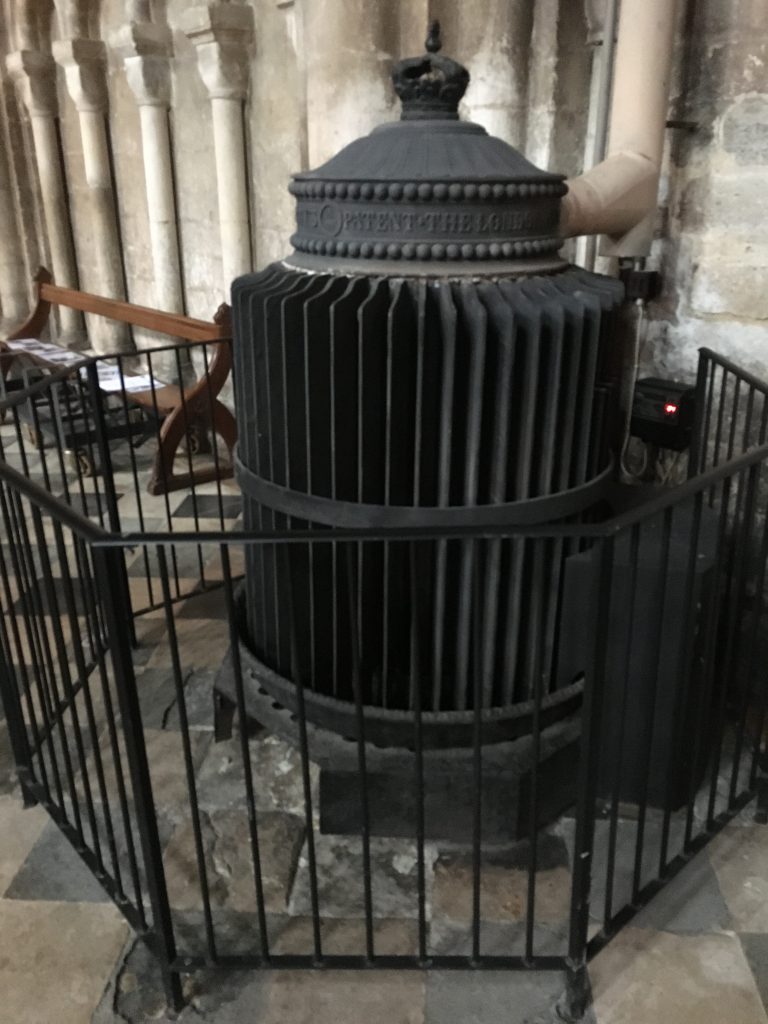
These heaters really chuck out some warmth.
Although it’s nearing mid-March, and is warming up outside, It’s still a wee bit nippy. Especially so inside this large cold stone edifice. One passes several of these enormous cast iron tubular radiators, as one circumnavigates the cathedral. And each time you can feel the heat emanating from them as you get closer.
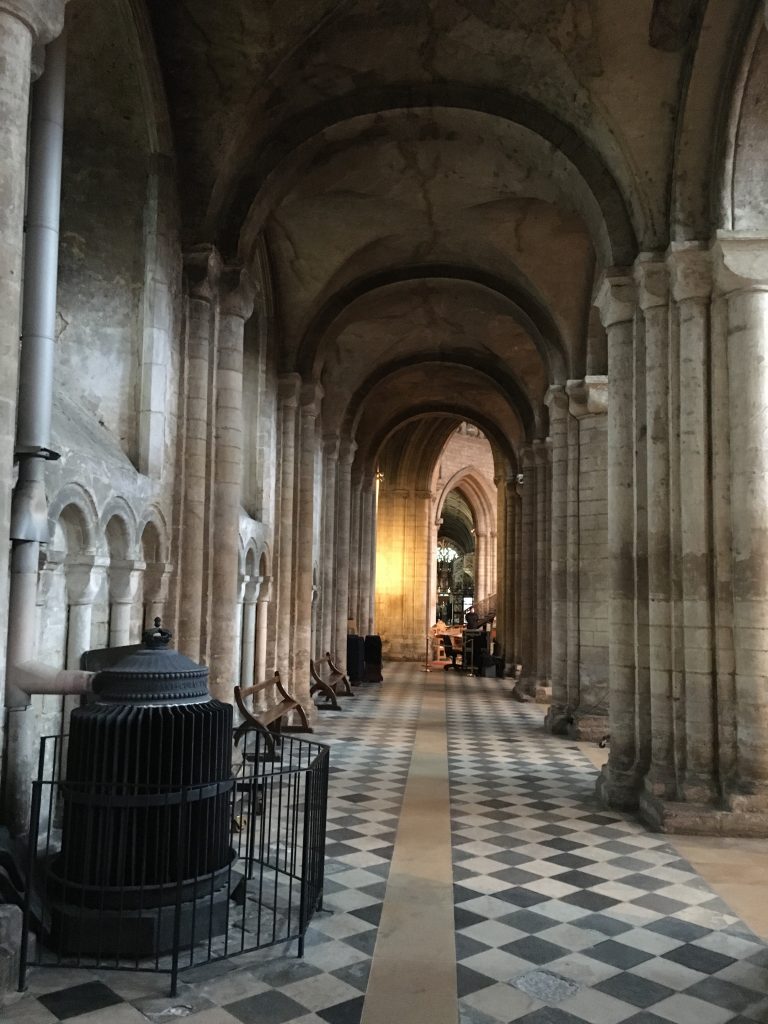
Everything is on an epic scale.
As huge as these heaters are, they’re dwarfed by the space they’re situated in. And look at the size of the many-fluted columns. Extraordinary!
‘Come on down to the big dig. Can’t get around the big dig.’ Don Van Vliet, aka Capt. Beefheart.
Every day that I can, I get out in to the garden. And I dig. It hasn’t been easy recently, with a lot of rain. But most days that I haven’t had full days of teaching work, I’ve dug another narrow strip.
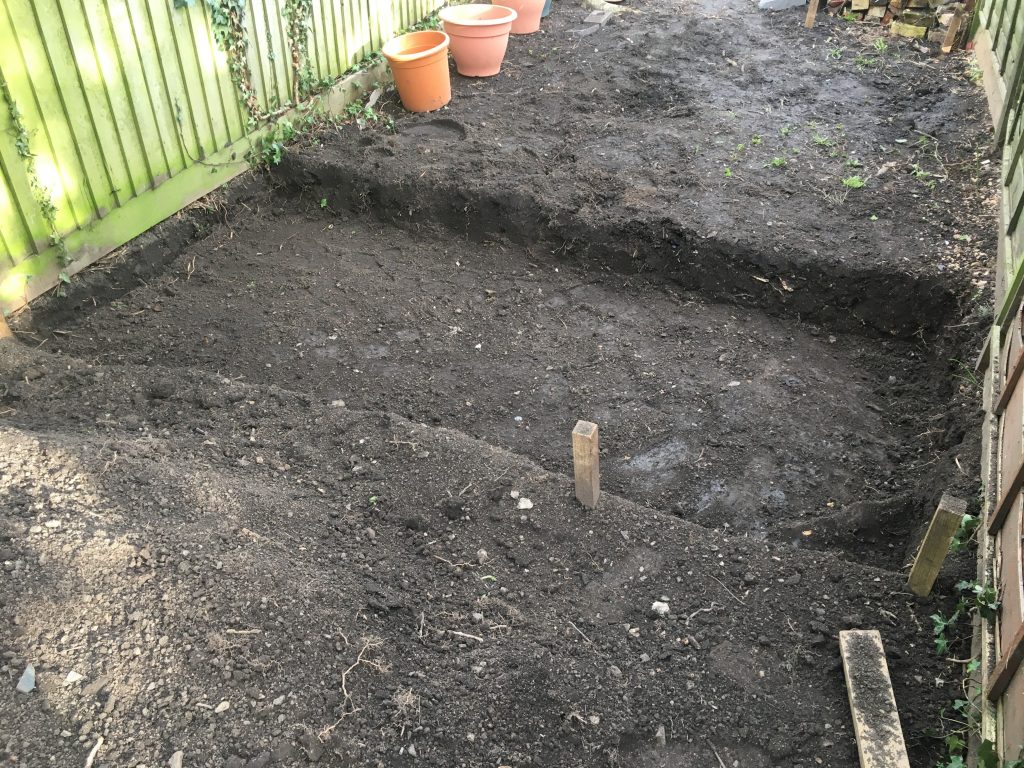
The light’s a bit better here; one can see both sides!
The plan is to dig down about eight to ten inches, and then level out the ground as flat and horizontal as I can manage. The footing will be a foot thick, so higher than ground level by two to four inches.
The floor of this dig will form the lower or under surface of the concrete pour. And that will, in turn, be the upper face or ceiling of the drum bunker/man cave (and now ‘escape from Mad Vlad‘s nuke threat’ bunker!).
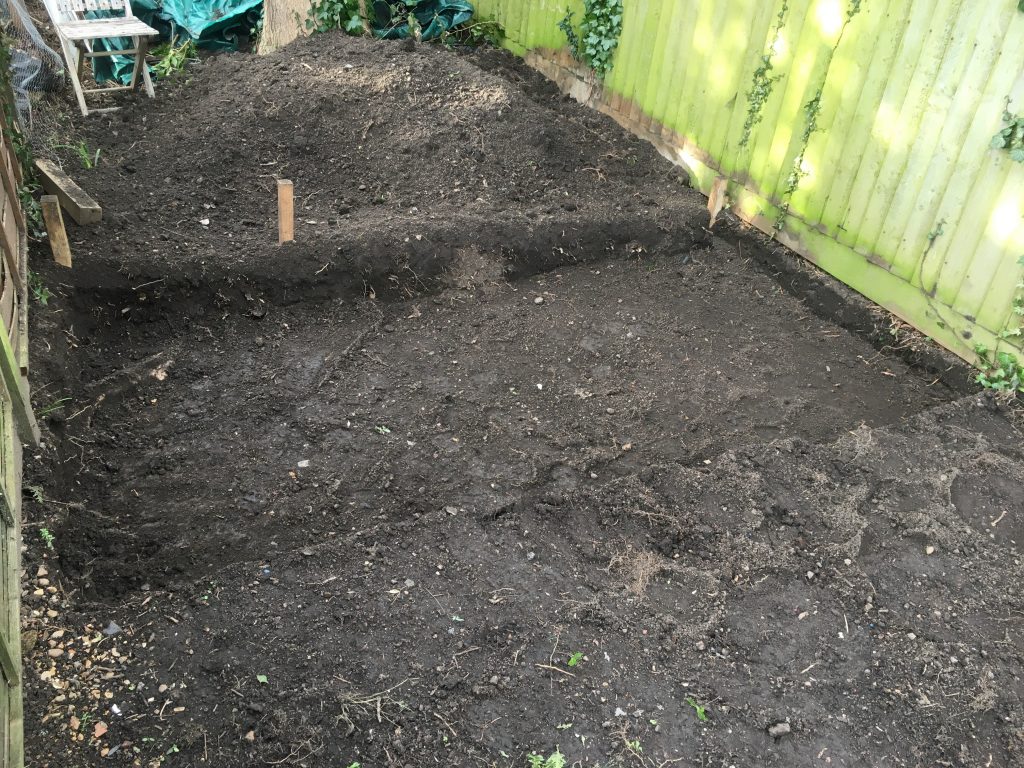
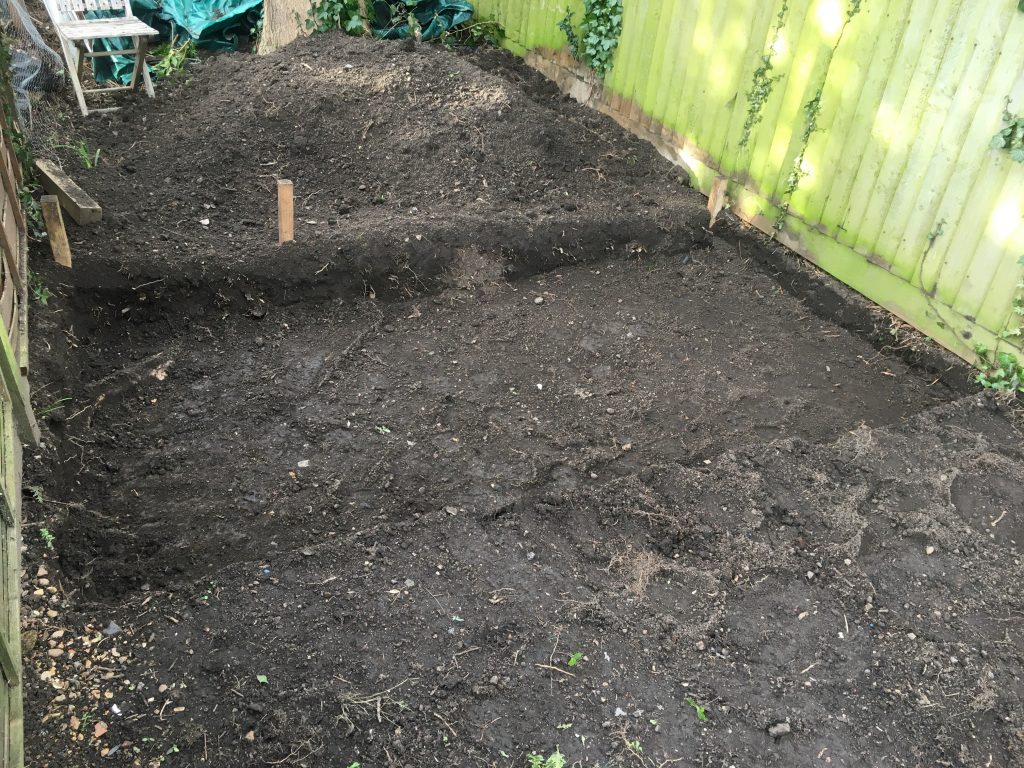
View from the back; a slightly different angle.
Each time I dig a strip it’s about a foot wide. Some of the earth, or ‘dirt’*, is recycled for the garden; I use a soil sieve to process it for use in places like the greenhouse, flower pots, and the cold frames, etc. Some goes to the municipal dump, where the local council recycles it.
* As our American cousins call soil or earth. I always find this a bit weird and jarring. Dirt has kind of ugly even ‘sinful’ connotations!
Viewed from the house or ‘front’ end.
I’m also weeding out bits of tree root and the root systems of all the plants (make that weeds!) that formerly colonised this area – indeed all – of our once totally abandoned garden. Those roots ‘n’ bits also go to the dump, as does any rubble or other detritus.
If I keep up the current pace of work – which is a bit weather dependent – I’ll be done in about ten or so days time. But I might get Teresa, and any friends or neighbours I can enlist, to help. The sooner this is dug out, the sooner I can make the ‘forms’, and get the concrete poured.
We watched this video this morning, after breakfast in bed. Very inspiring!
I’ll be pouring what’s called a ‘raft’ type foundation. This is like a combination of the strip and slab foundations. I’ll most likely draught something in Adobe Illustrator to work out dimensions. If/when I do that, I’ll probably post it here.
Today, 3rd March 2022, is World Book Day. And this year the institution is 25 years old!
I decided to list 25 titles, in no particular order, other than that in which they occurred to me. I’ll not say much about each book, but instead just post a cover pic (where I can of the edition I first owned/read), and a few words.
So, here goes.
Ah, the nostalgia!
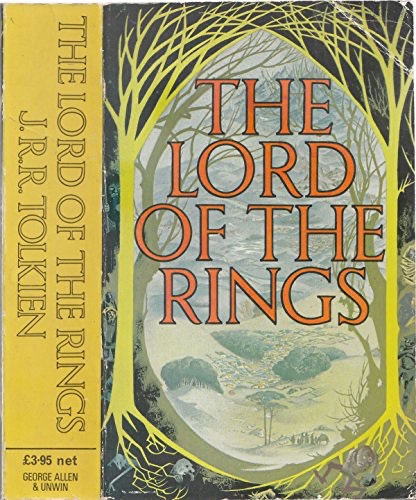
The Lord of the Rings, Tolkien.
‘Epic and homely’. Damn right! I read this numerous times in my childhood, and absolutely loved it. If I’m honest, the growing legacy of the Peter Jackson movie franchise is kind of spoiling it all for me now.
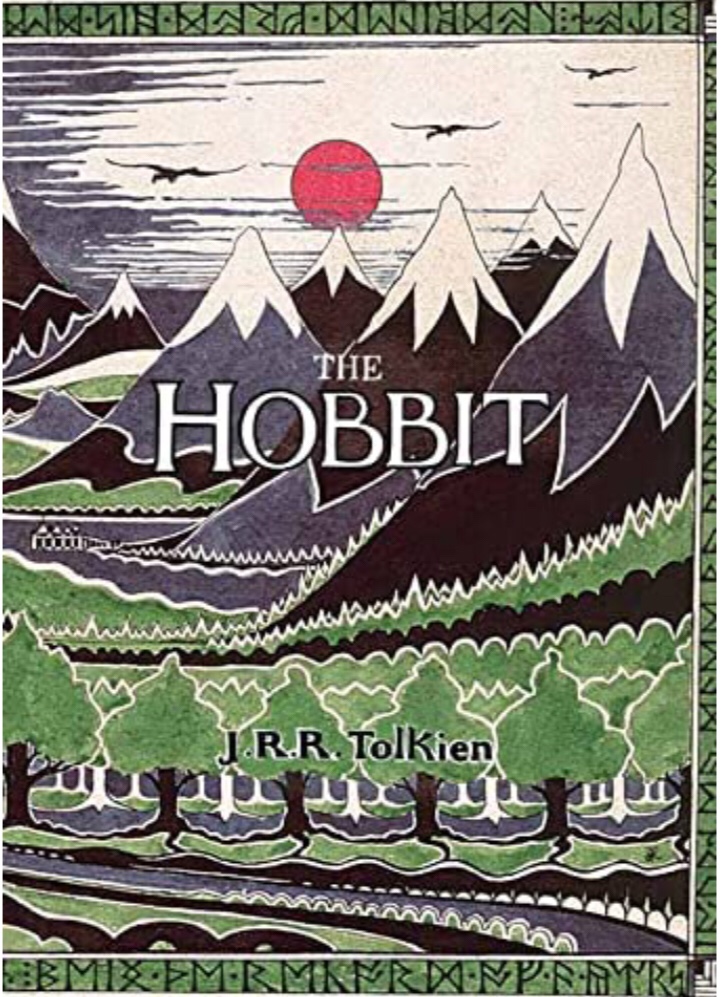
The Hobbit, Tolkien.
Beautiful 75th anniversary edition.
Before I read the LOTR I read the more kiddie friendly The Hobbit. Equally enchanting, if more modest in scale.
Another trilogy in its single volume guise.
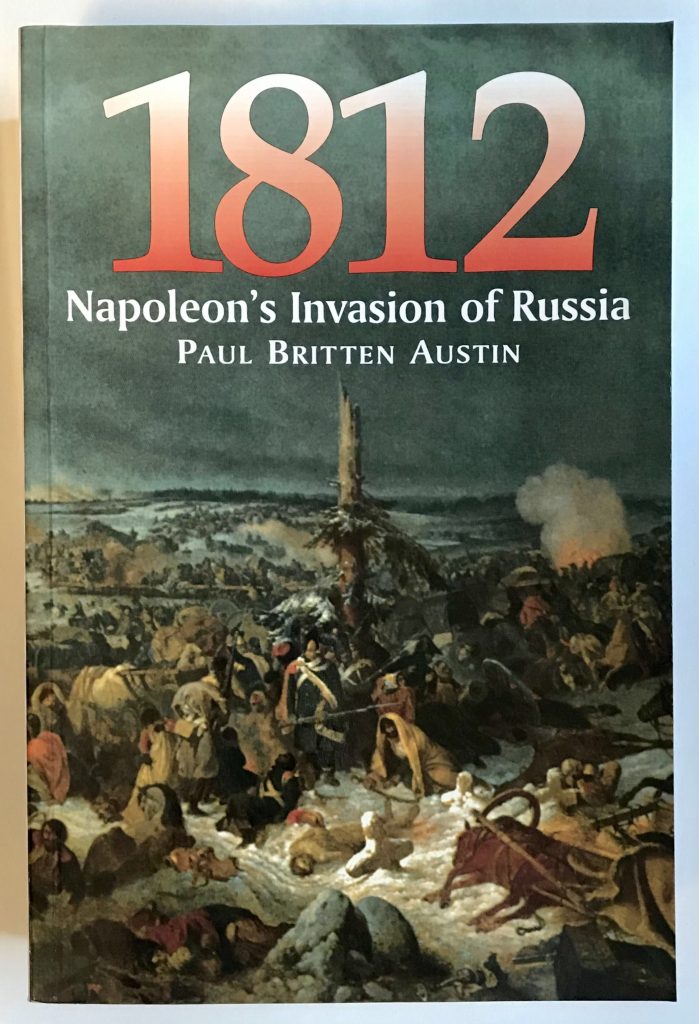
1812 Trilogy, Paul Britten Austen.
This historical trilogy, a tapestry of interwoven first-hand accounts, condensed into a single volume with Bible-thin pages, was an incredibly exhilarating read.
My copy doesn’t have the hard slipcase, alas.
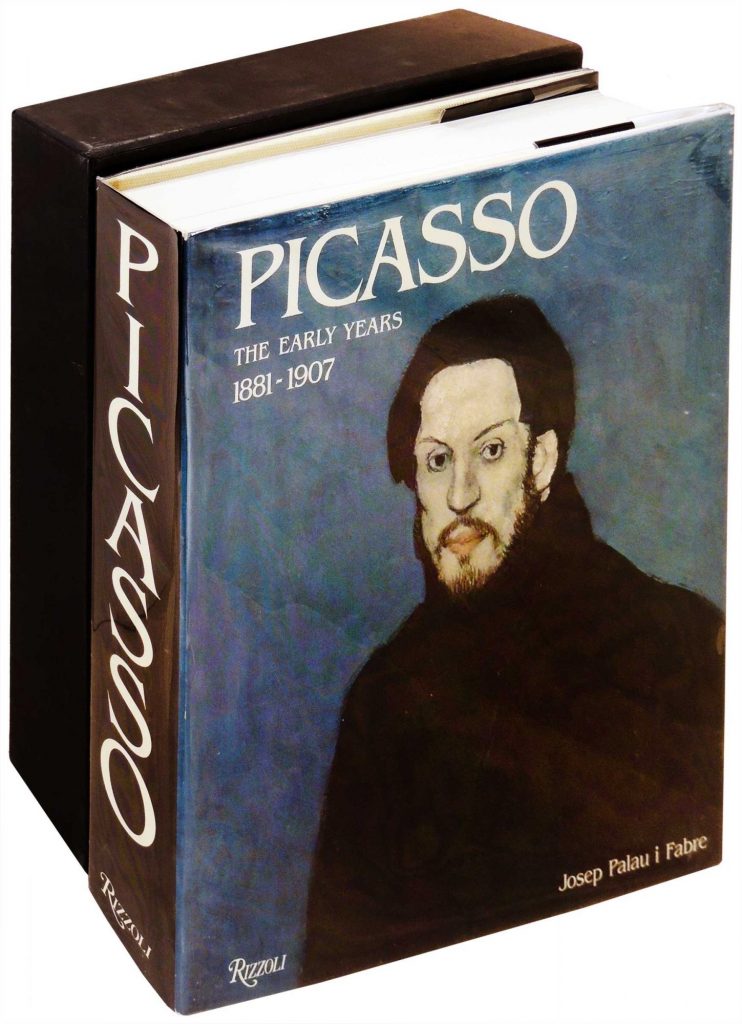
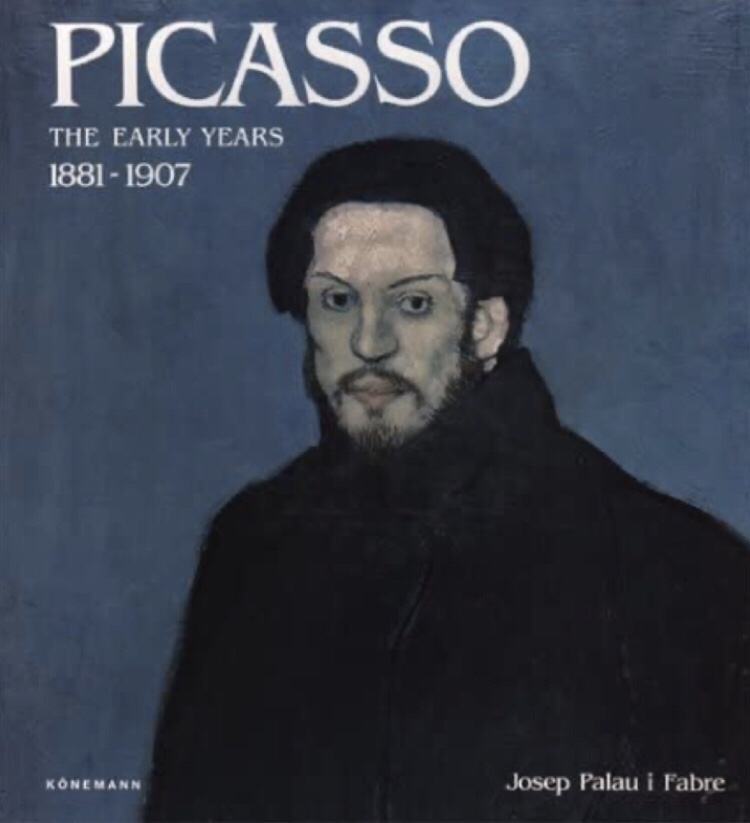
Picasso, The Early Years, 1881-1907, Josep Palau i Fabre.
This was my first ‘plush art book’. I was somewhere around 16-18 yrs old at the time. Massive, and massively inspiring. (The book, not me!) I mean no disrespect to the author, but for me it’s all about the pictures, not the text.
A much more recent purchase.
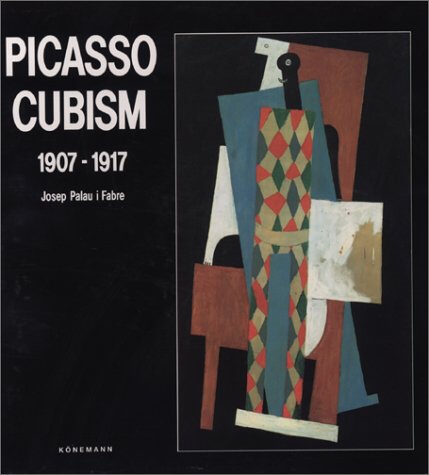
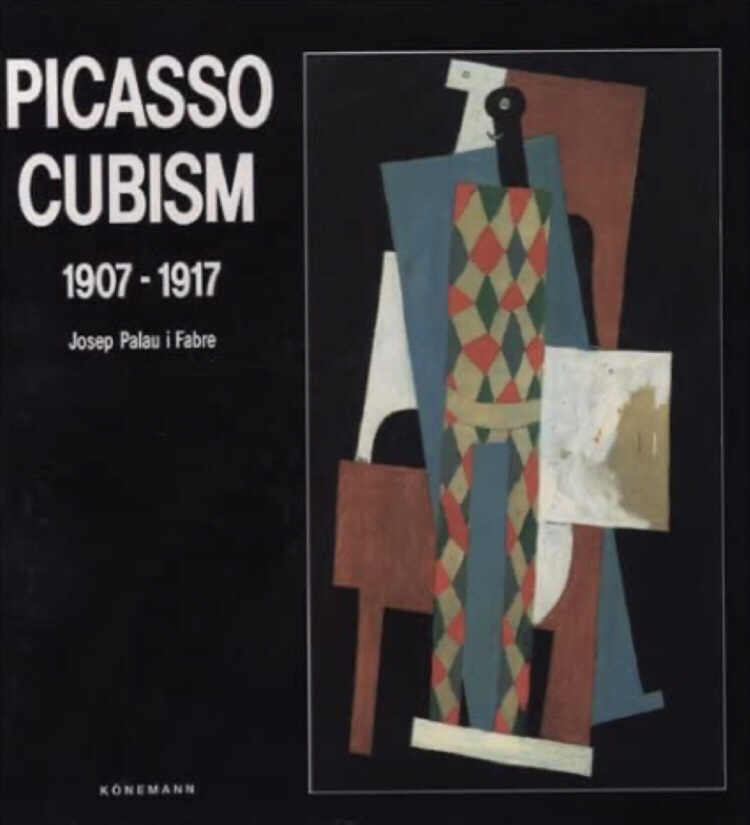
Picasso, Cubism, 1907-1917, Josep Palau i Fabre.
Many moons after buying i Fabre’s first voluminous work, I got the second. This time with the slip-case! And it’s equally flabbergasting in terms of Picasso’s Krakatoan artistic powers.
A whopper!
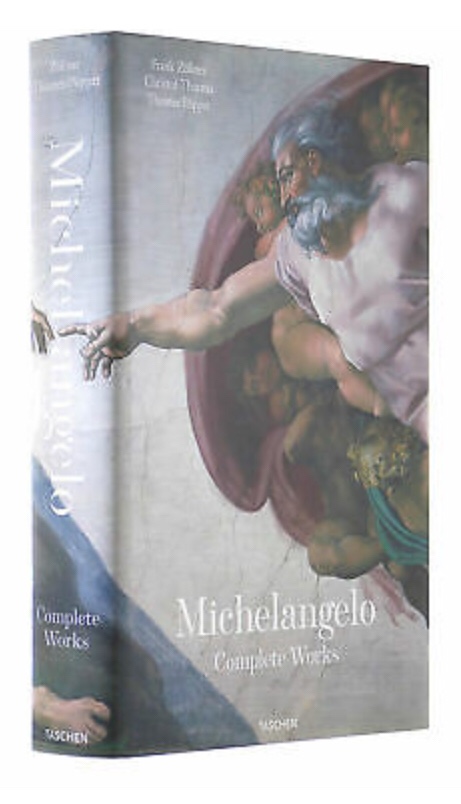
Michelangelo, Complete Works, Zoller et al.
This is both the biggest and most expensive art book I’ve ever bought. But that kind of befits the Titan that was Michelangelo. World Book Day is primarily about reading, one supposes. And with my art entries to this list of books, it’s all about the pictures. But hey, picture books have their place!
Ok, so I’m obsessed…
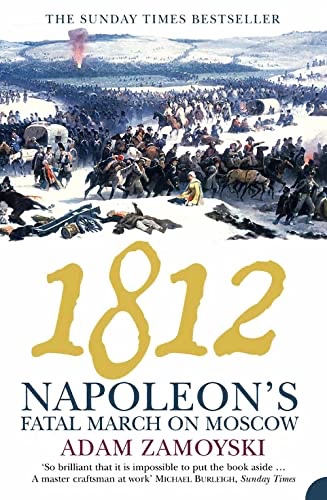
1812, Adam Zamoyski.
Another 1812 themed book? And it’s not the last on this list. This was a cracking good read. Not at all like Paul Britten Austin’s ‘word film’, this more trad’ history nonetheless crackled.
What is it about invading Russia?
Barbarossa, Alan Clark.
‘An unimaginable harvest of sorrow’ sayeth Alan Clark. Aye, and a rollicking good read. An oldie, but a goodie. Now, with Putin invading Ukraine, it all seems frighteningly close or familiar…
Jack’s debut.
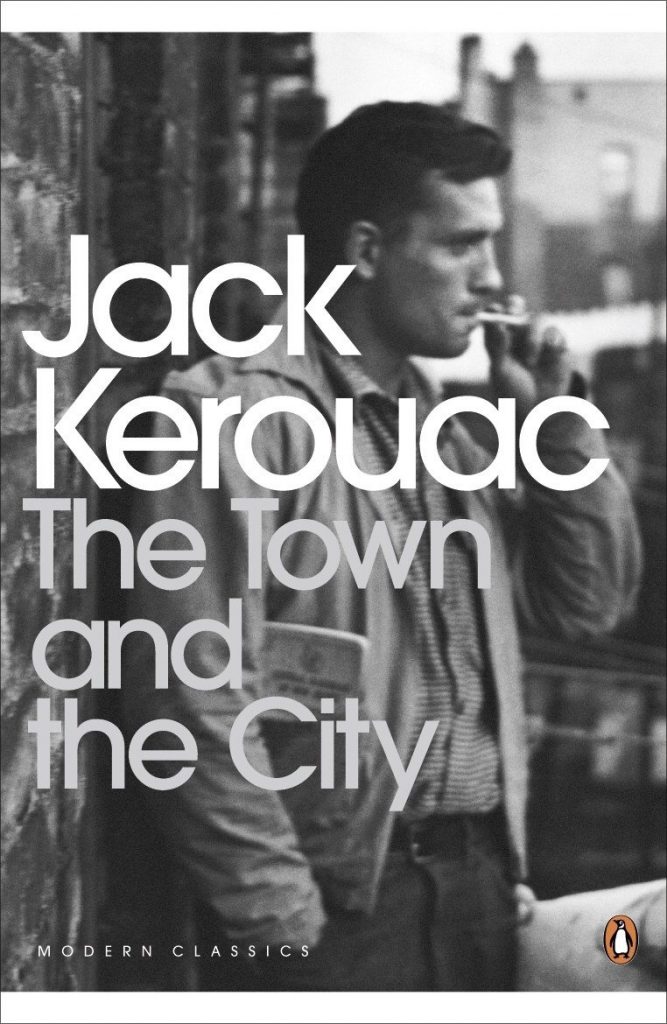
The Town & the City, Kerouac.
A fantastic book. The descriptions of the everyday minutiae of life are spellbindingly rhapsodic and beautiful, in a very real, humble and down to earth way.
This was the edition I first read.
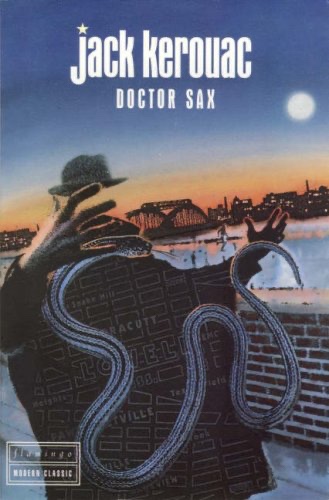
Doctor Sax, Kerouac.
One of my favourites by the sad-eyed Dharma Bum. Very evocative of childhood, tinged with the saudade of looking back whilst growing older, like much Kerouac.
I racked up library fines gawping at these!
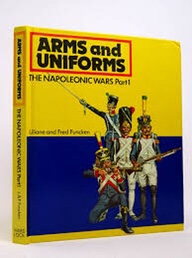
Arms & Uniforms, Napoleonic Wars Vols I & II, L & F Funcken.
In terms of the pleasures a book can give, the two Napoleonic volumes of the Arms And Uniforms series, by the prolific Frenchies Liliane et Fred Funcken, rank very highly with me. As a kid they had me totally mesmerised!
I learned much later that L and F Funcken worked quite a lot with/for Hergé. It’s nice to discover such connections!
Terrific!
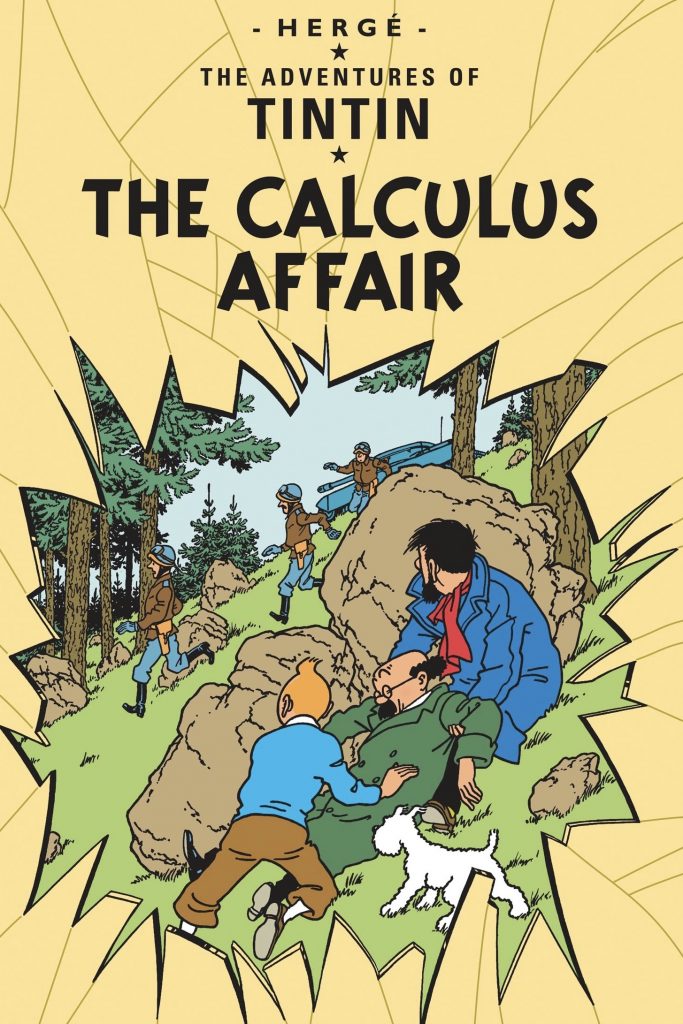
The Calculus Affair, Hergê.
From arty picture books to kid’s ones. I love almost all the Tintin adventures. The best are a sublime mix of fabulously evocative art with simple but stirring storytelling
Absolutely ruddy marvellous!
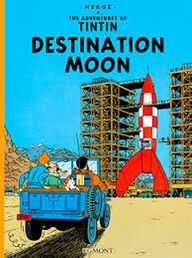
Destination Moon, Hergé.
Bizarrely I had Explorers On The Moon years before I got and read the first part of this fab two-part adventure, Destination Moon. Once I got the latter, it quickly became a favourite.
Oh, and, by and large, I much prefer the texts in Hergé’s adventures – brilliantly rendered into English by Leslie Lonsdale-Cooper*, and Michael Turner – to the cloudy verbosity of most art history/criticism.
* She died Dec 12, 2021, aged 97!
This was the edition I had.
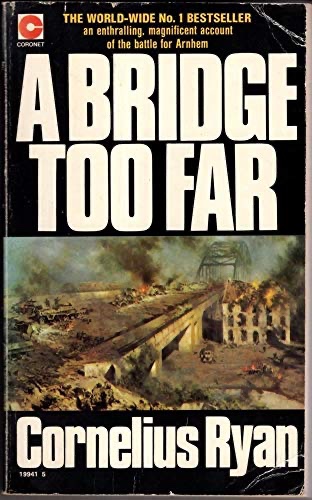
A Bridge Too Far, Cornelius Ryan.
I got a copy of this book on a secondary school trip to Ely, when we visited the market. Ryan also wrote The Longest Day (which I haven’t read). Both were used as the basis for epic WWII movies. And both this book and the film based on it are integral to my childhood.
A dreadful cover, but…
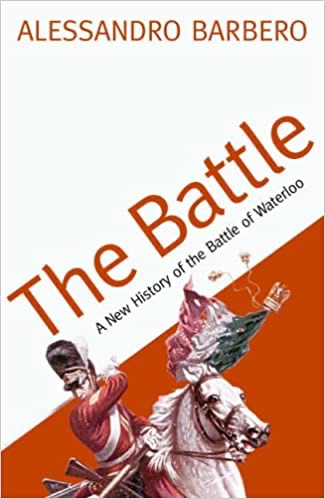
The Battle, Alessandro Barbero.
Whilst I don’t like the cover of this book (it’s the same edition I bought and read), it’s a very good read. And, what’s more, despite my dislike of the design the cover is very resonant for me; it was an Eagle Annual article on Sgt. Ewart’s capture of an Eagle (the echoes are accumulating!), as depicted on this very cover, that first introduced me to the titular epochal battle.
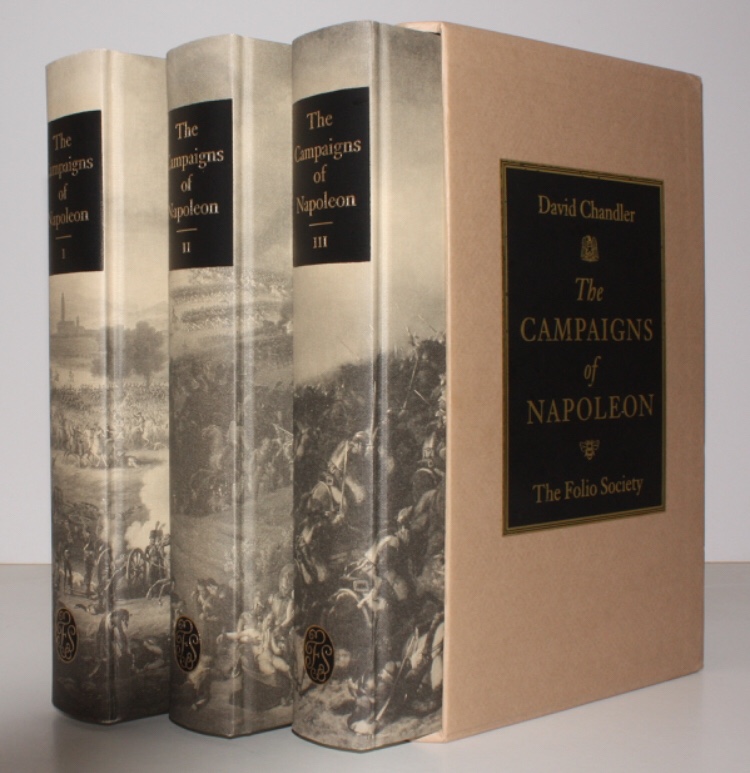
The beautiful Folio edition.
The Campaigns of Napoleon, David Chandler.
Anyone reading my list will detect certain themes: childhood nostalgia, Tolkien,Tintin, Kerouac, art books, and military history, with a emphasis on The Napoleonic Wars and WWII. This David Chandler trilogy on Boney’s battles was terrific. And the Folio edition – which is what I have – is beautiful.
I read this whilst visiting Waterloo in 2015.
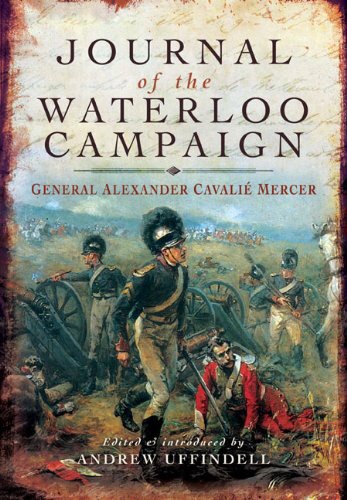
Journal of the Waterloo Campaign, Cavalie Mercer.
Avoid the abridged Pen & Sword version of this like the plague! It’s littered with editorial errors. This full version, also from Pen & Sword, is incomparably better produced. And Mercer’s tale is ace.
It was very poignant and affecting to read whilst visiting Belgium and the Waterloo battlefields in 2015, on the 200th anniversary of those terrible few days. I even stood on the spot, where a memorial now stands, where Mercer’s artillery troop did their bloody business.
A bit out of my normal way…
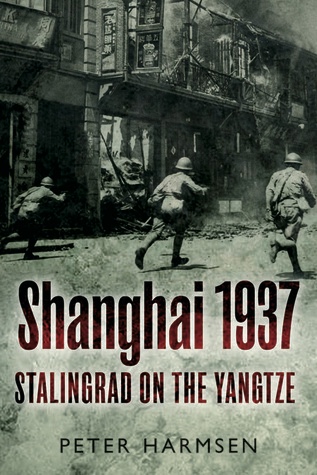
Shanghai 1937, Peter Harmsen.
For us in ‘The West’ we almost always think of WWII as 1939-45. Not so for Japan and China! They were already at it, hammer and tongs, in ‘37, as this truly excellent book relates.
Yet another ‘picture book’!?
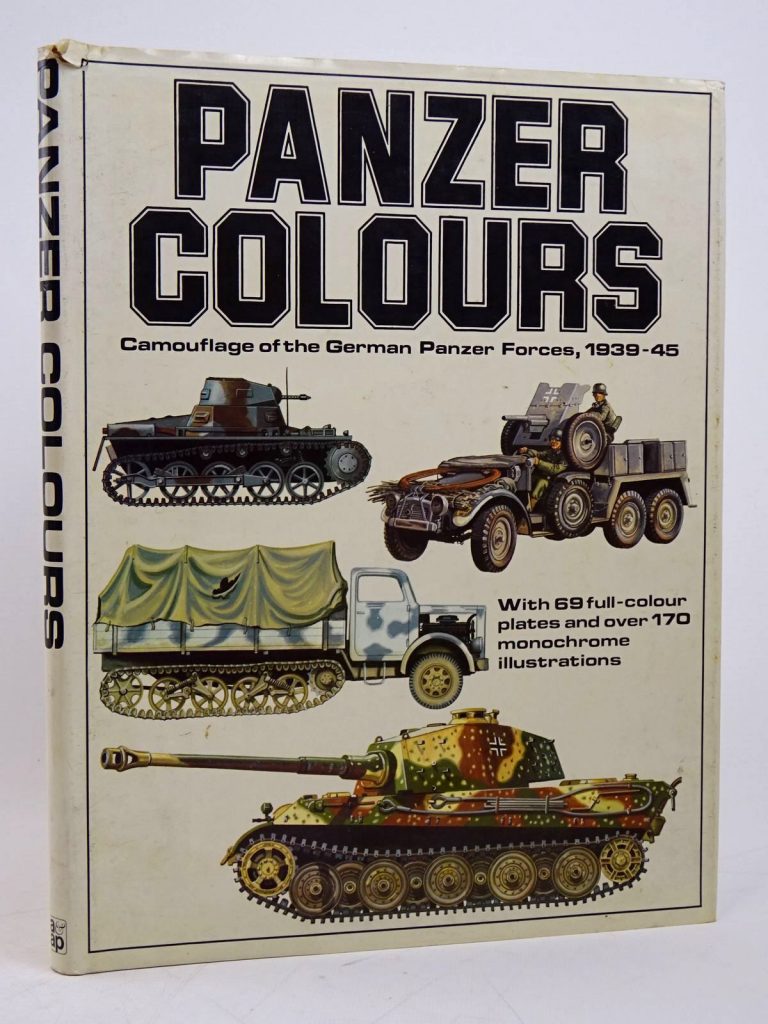
Panzer Colours, (?).
Once again the criteria here is pleasure per square inch. And as a kid this was another military themed book that totally fascinated me. My dad and a lodger, Tim Seward (now an artist living and working in France!), made terrific 1/72 model tanks. This was part of their ref’ library.
A handsome edition, and the one I have.
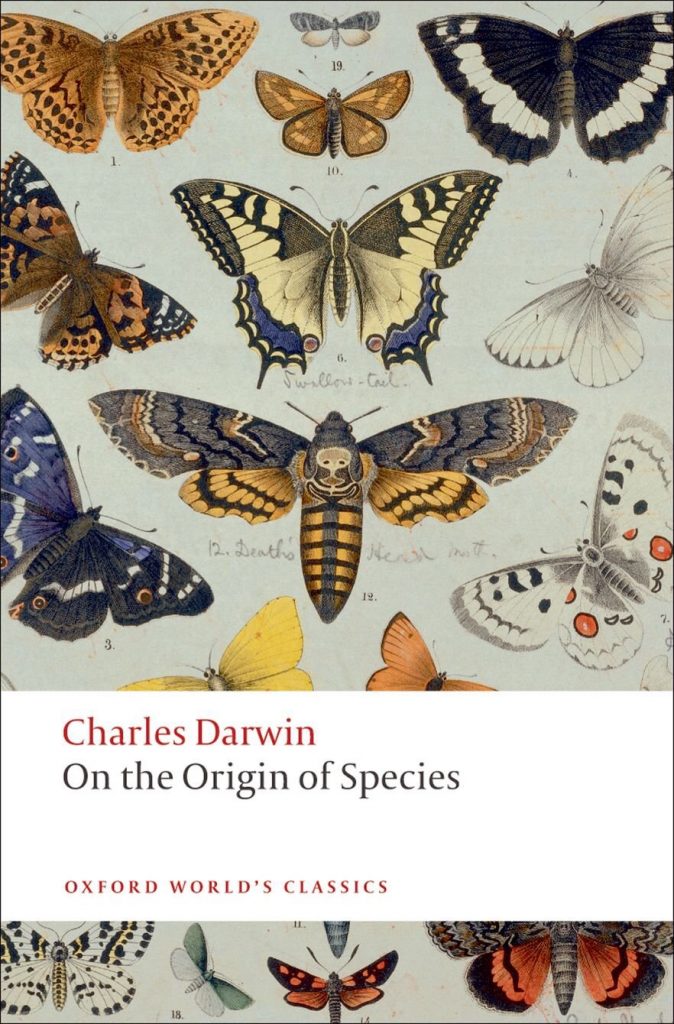
On The Origin of Species, Darwin.
Around the 200th anniversary of his birth, and the 150th of the publication of this, his major work, I was reading quite a lot about Darwin and evolution, and related stuff.
I’ve tried to avoid ‘worthy’ titles, and choose those books I’ve enjoyed the most. But Darwin’s origins is, whilst sometimes a pleasure to read, and sometimes like swimming through molasses, just too important to the development of modern science and thought, and (one can hope/dream) the trajectory our culture might take, to be omitted.
Some might choose The Bible. An awful book, in my view. This is nearer to that point, for me.
A breeze-block of a tome.
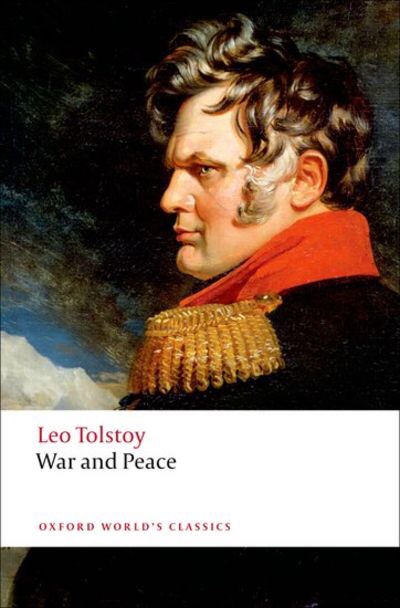
War And Peace, Tolstoy.
Ok, another ‘worthy’ entry. Initially Tolstoy really got my goat, but as I read on, I began to enjoy this 1812 themed epic. By the time I finished it, I loved it. Flawed, like it’s hero, Pierre, and all humanity. But an epic masterpiece nevertheless.
Ripping good yarns.
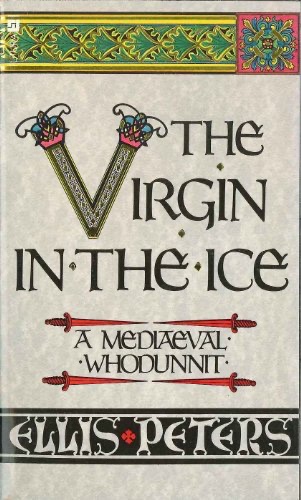
The Virgin in the Ice, Ellis Peters.
So, from Darwin and Tolstoy to more pulpy pleasures. I first met Cadfael in audiobook form, whilst working with illustrator Tim Oliver. Thanks Tim! I’ve subsequently collected nearly all of Ellis Peters’ monkish mysteries. They are formulaic. But by gum, the formula’s a good ‘un!
Flashy, in full fig.
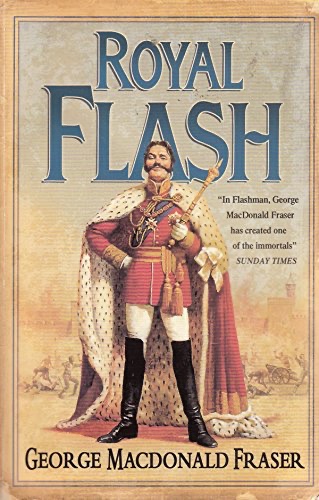
Royal Flash, George MacDonald Fraser.
I have another pal to thank/blame for more furtive pulpy paperback pleasures. Thanks to Jeffers Mayo for this one! And, as with Cadfael, Flashman is such a charmer I went out and bought the whole series, and read ‘em all. Such fun!
Kerouac, a slight return…
Dharma Bums, Kerouac.
Pictured above is one of two editions of this book I’ve owned and read. I like this because it’s one of Jack’s more straight journalistic novels, and we find him as a mountain top fire lookout, and meet poet and fellow Dharma Bum Gary ‘Japhy Ryder’ Snyder…
‘As your attorney I advise you to…’
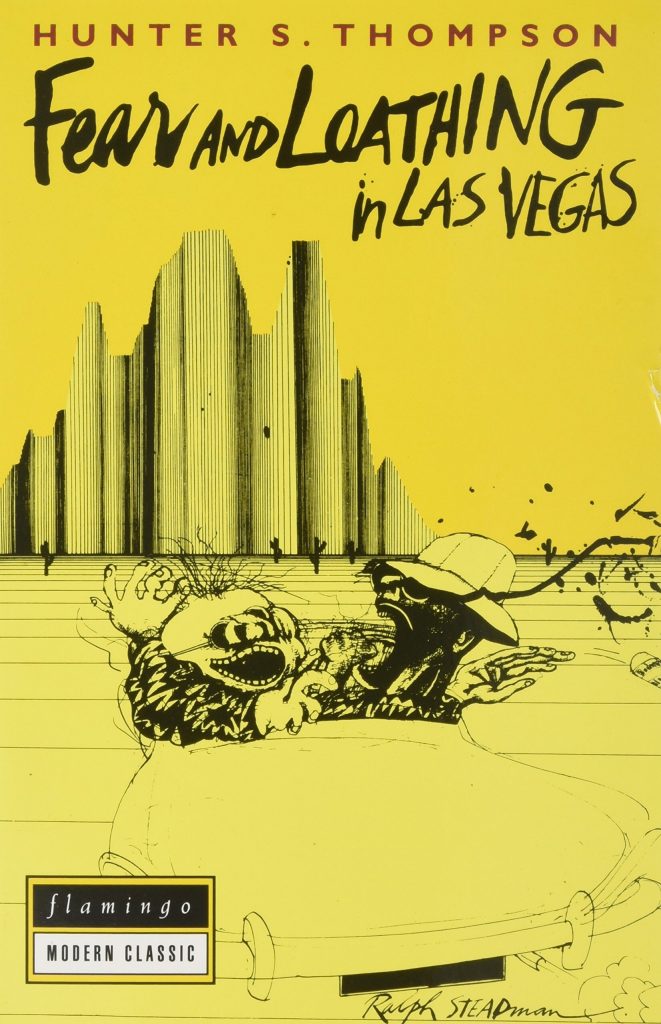
Fear & Loathing in Las Vegas, Hunter S. Thompson.
I laughed like a drain reading this. Often in public. And I occasionally worried folk might think me as unhinged as the gonzo lizards that populate this madcap book. Looking back on it all now, it’s a bittersweet chapter in my life and my reading. But the laughter got it on this list.
Okay, so there’s my 25 books. I found coming up with this list much harder than I’d an anticipated. Given how much I enjoy reading, and how much I’ve read over the years, I really struggled to think of what I’d enjoyed most!
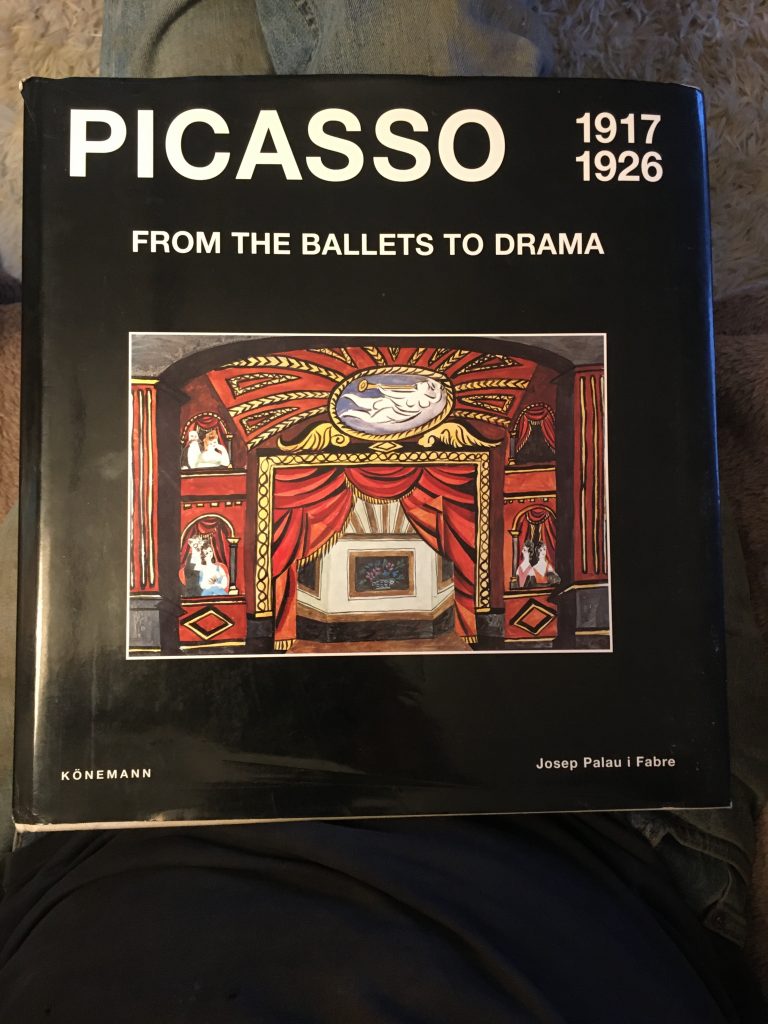
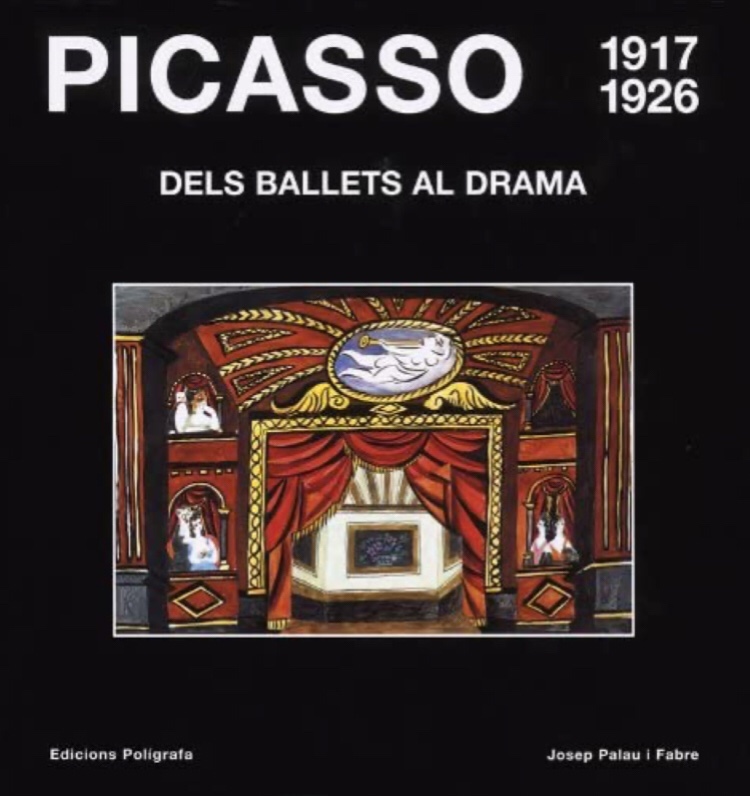
This arrived today. It’s the third instalment in what may have been intended to be a complete history of Picasso’s prodigious output.
Although Josep Palau i Fabre, poet, author and Picasso nut, lived to the ripe old age of 90, he didn’t get much further than this (there might be a final follow up), which ends relatively early in Picasso’s lengthy career, in 1926.
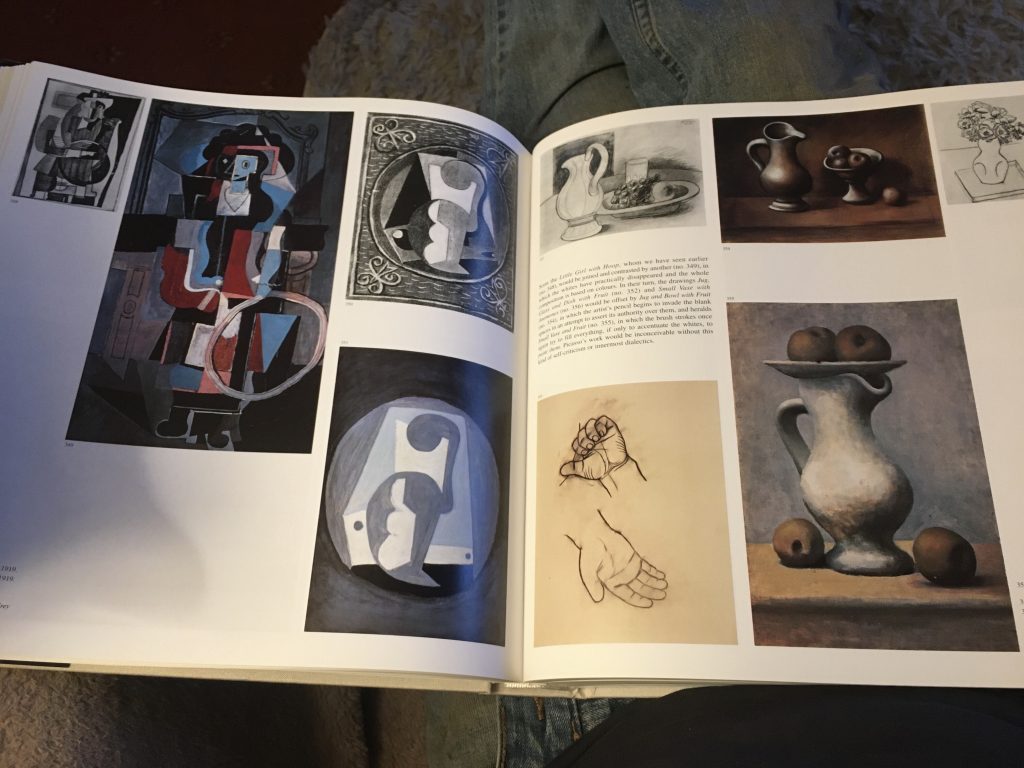
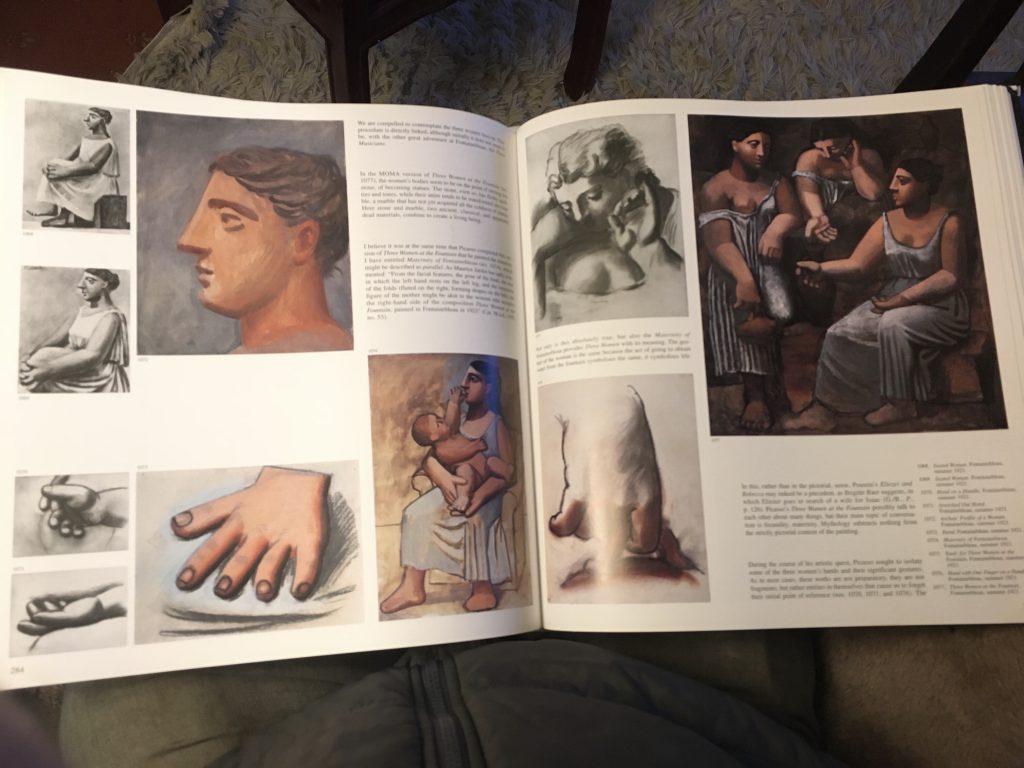
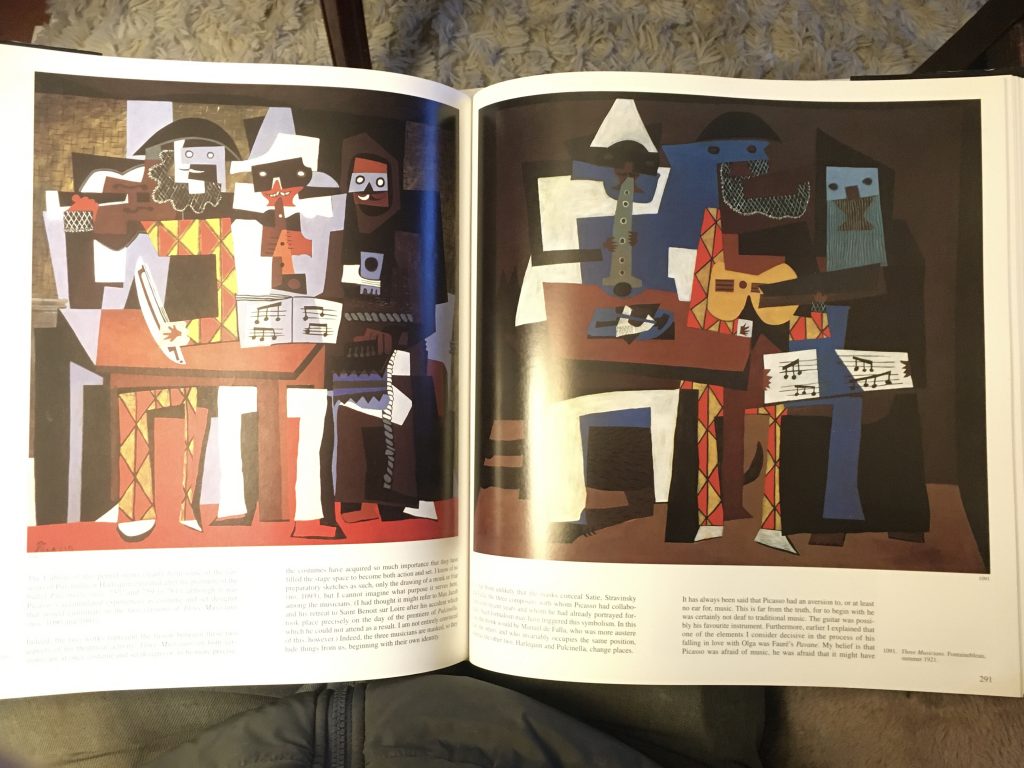
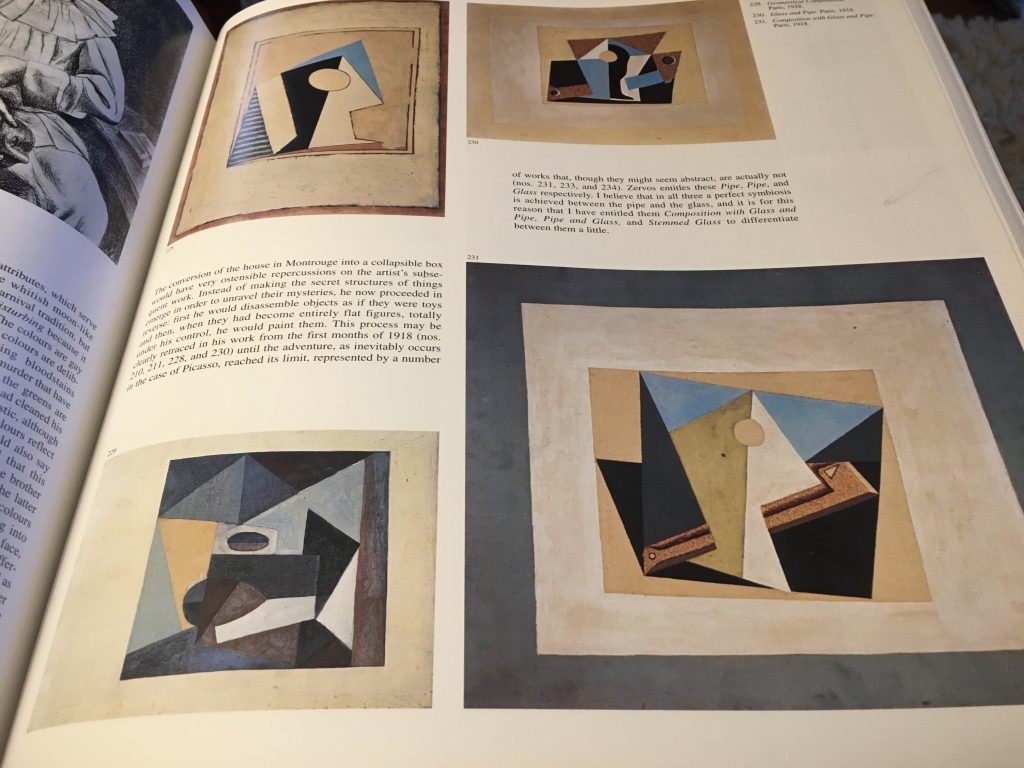
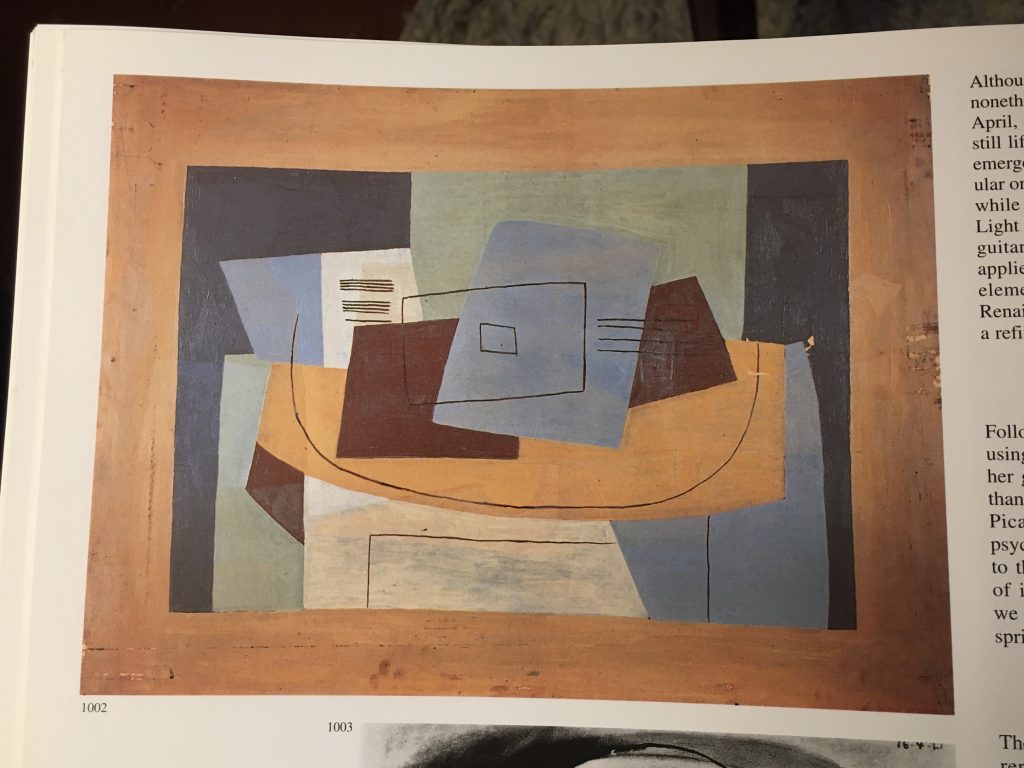
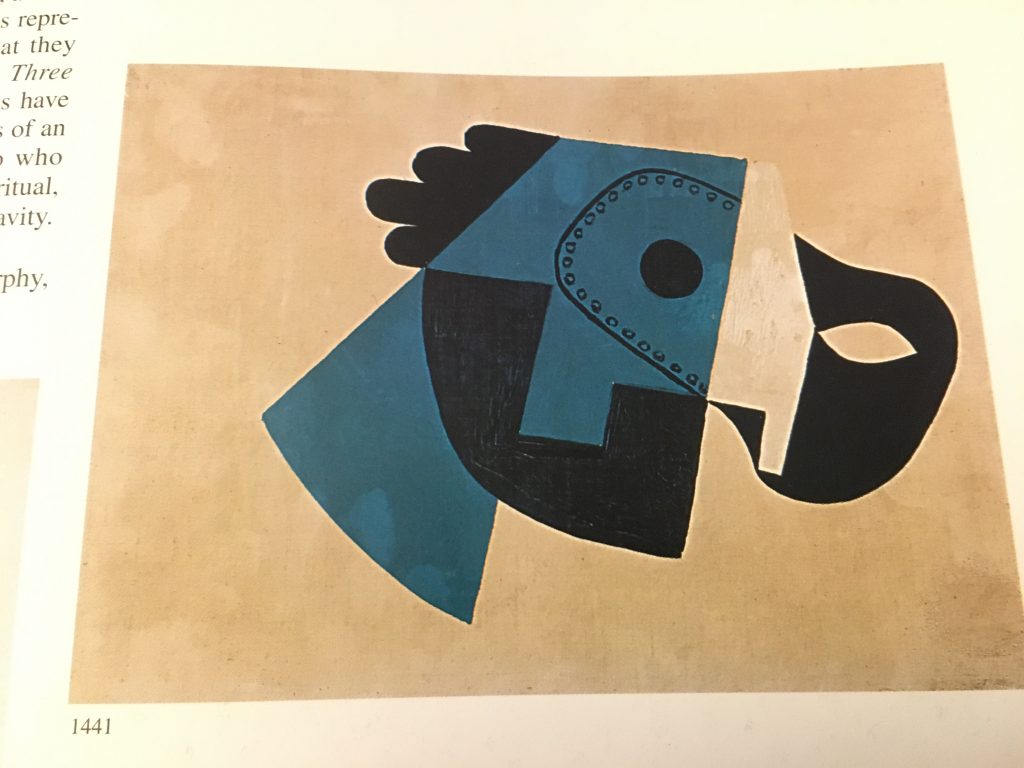
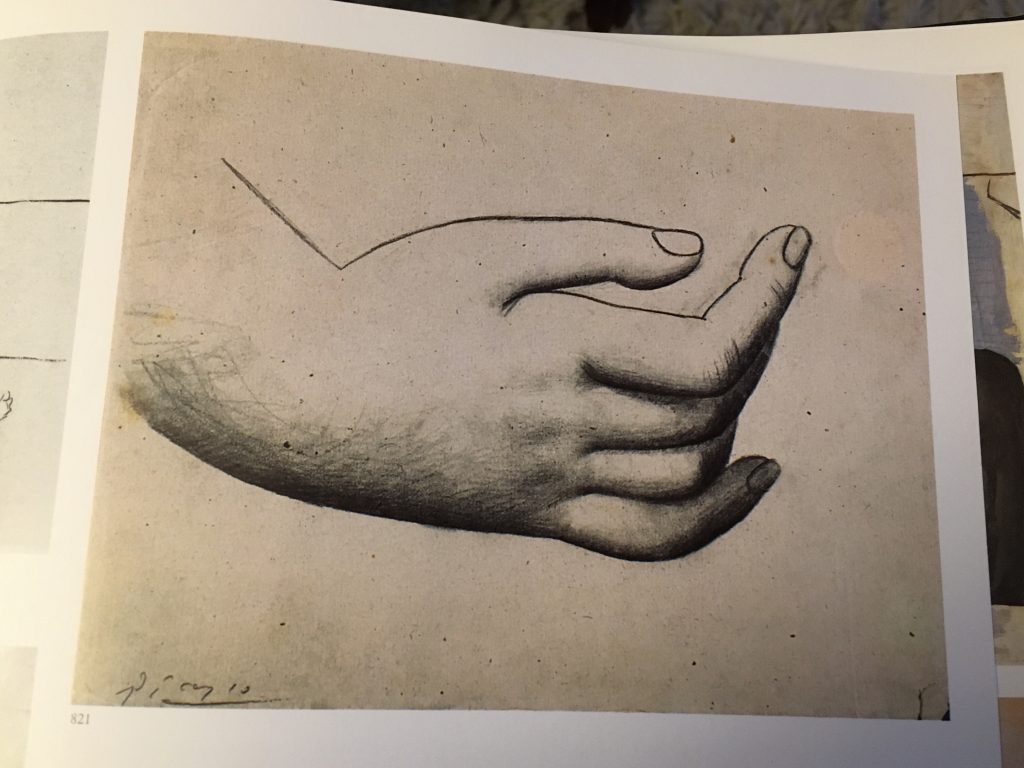
A few spreads, showing the rich diversity…and wide range of styles…… Picasso favoured in this era. From Cubism to neo-Classicism.
The choice of cover image is not my favourite, from the many potential alternatives in this, as ever, very voluminous selection. There are 1800 images, 700 in colour! But the overall quality of the book is in keeping with the first two instalments.
What I love most about Picasso, in addition to that portion of the work that meets my own personal aesthetic preferences, is Picasso’s sheer artistic fecundity. It’s truly astonishing how he not only works through ideas in whole series of variants, but how freely he moves between different styles and approaches, even mediums.
I love his colour choices, and his design abstractions. I like some of these still lives.Such strong colour and graphic design!
This aspect of his volcanic output makes him almost unique, in my experience, both in modern art and, indeed, art of all the ages. The only other artist that comes close – as far as I’m aware? – might be David Hockney.
Of the three volumes I now have, I’m inclined to think that, perhaps, the first two have more art I really like. But there’s still an immense amount I love. But, as I already said, as much as the qualities of individual works themselves, it’s the sheer life energy manifested in Picasso’s massively multifaceted output that is, in and of itself, very compelling.
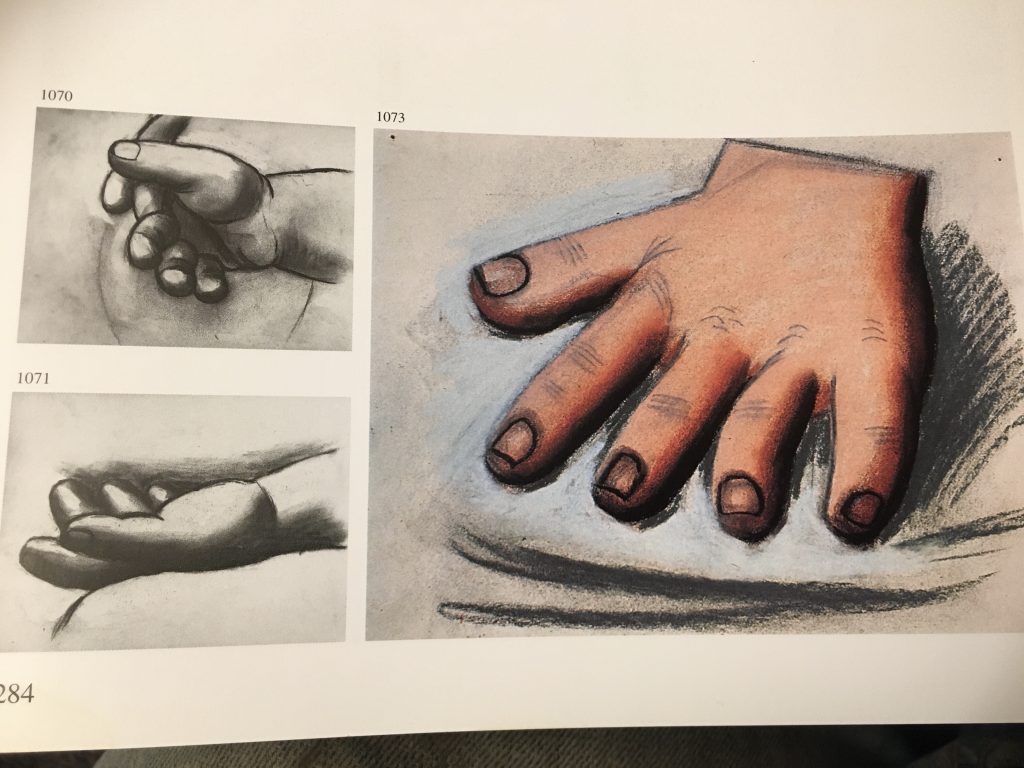
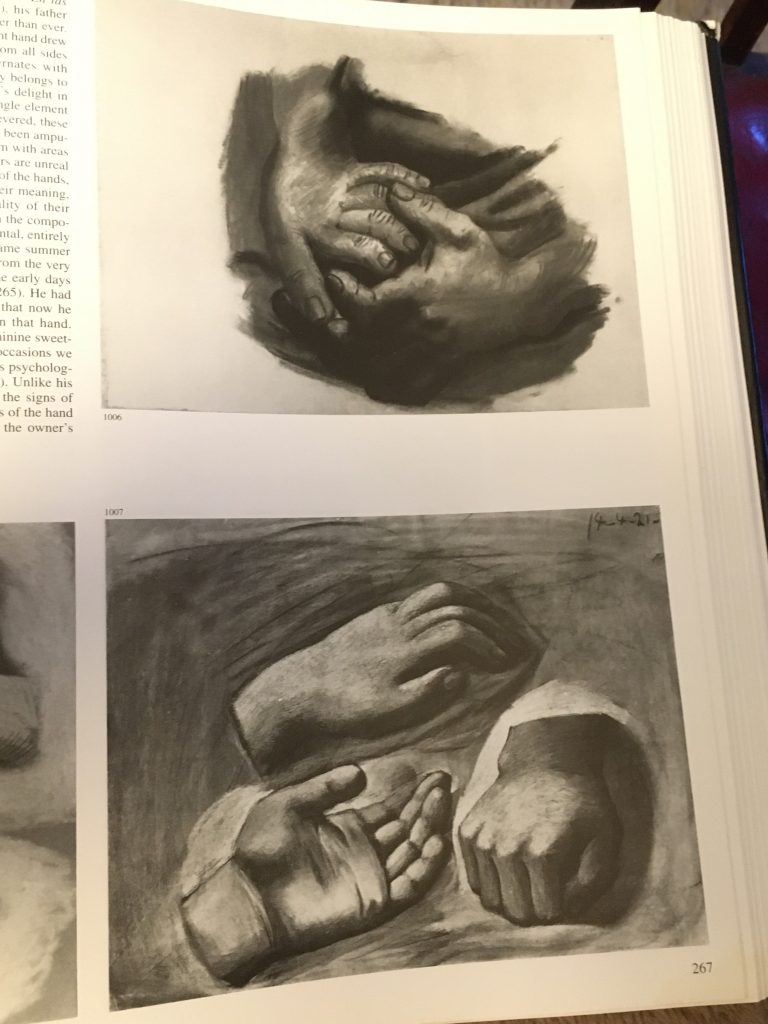
Throughout the book there are a few sections of hands…in themselves both quite varied and quite similar…… quite sculptural!
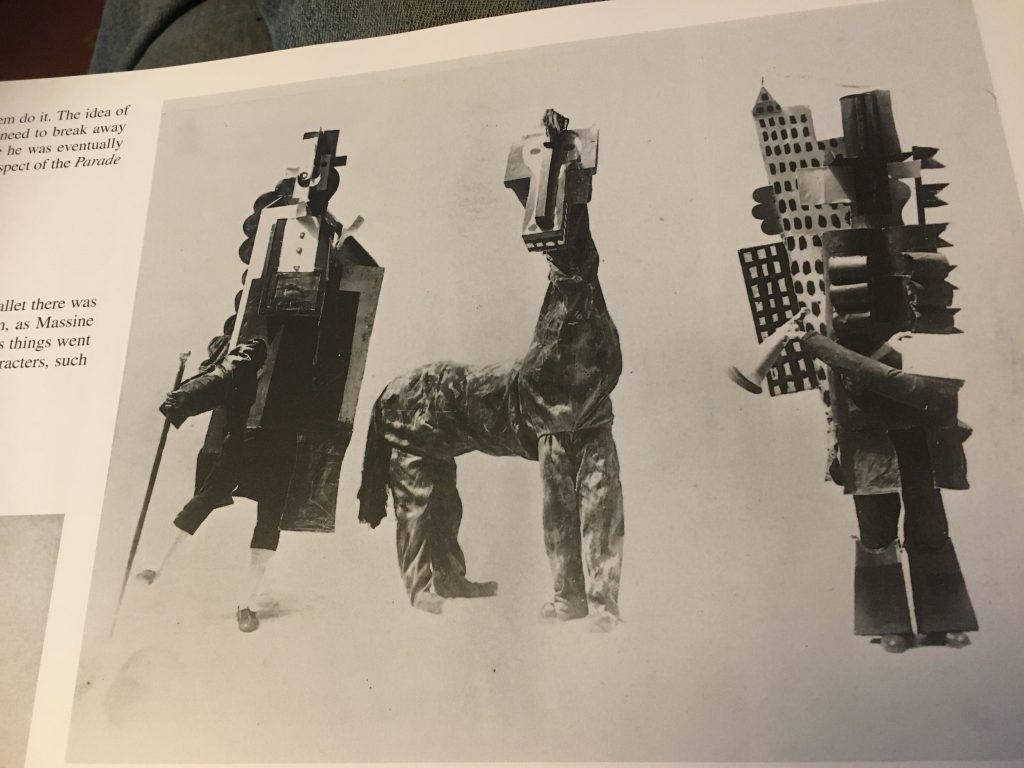
I’ve included a number of images of artworks I like. I did think about including some of the stuff I don’t like. There’s plenty of it! The only thing in that line that I’ve included pictorially is the photo of bizarre theatrical costumes, including a kind of ‘pantomime horse’!
Bonkers!
This isn’t a review of the text of this book (which I’ve only dipped into thus far). As I’ve said elsewhere, about the other two books i Fabre wrote, about earlier phases of Picasso’s life and work, my primary interest is predominantly visual.
And as with those two former titles, I do love this one. I feel a bit mean giving this four and a half and not five stars. But I decided to do so, on the grounds that I slightly prefer more of the art works in the first two instalments of this very detailed and comprehensive series of large plush art books.
A fascination with manual labour is something I’ve always had. Perhaps rooted in seeing my dad making stuff, bewitched by his workbench and tools, in the garage of our childhood home.
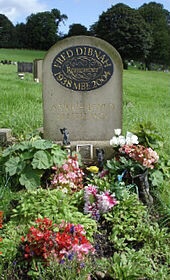
I don’t recall now when I first encountered Fred, but he immediately had a certain appeal. His gruff no nonsense manner, and pride in his Bolton roots/accent, also strike a chord, of some sort. My maternal Granny was evacuated to Blackpool from London during The Blitz, so there’s a Northern connection in the family.
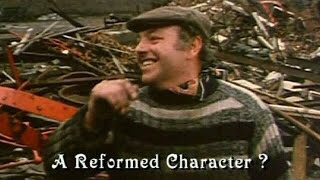
Fred at work in the early days of his TV fame.
As appealing as he is, through his passion for ye olde ways and Victorian engineering, and such like, his flaws are also very much on display. His curmudgeonly old-fashioned old codger streak is ten miles wide. And he’s clearly very selfish and self-centred. But he’s openly and bluntly so; what you see is what you get.
One could pick apart his reverence for the past. But at the same time, he is on to something. and he’s not under any illusions as regards how hard life was in the ‘good old days’. Or is he? Well, that’s something I might mull over later in this piece (and/or any other Fred-centric future posts).
This first TV series is extremely candid.
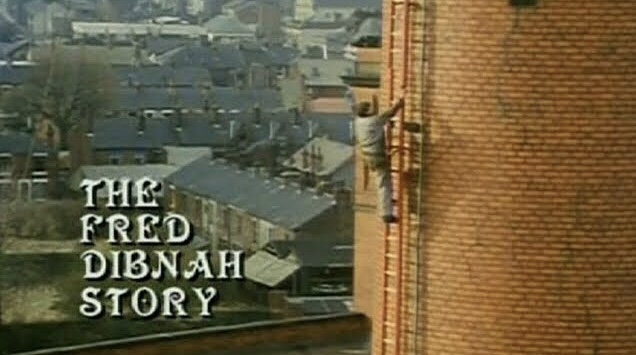
In the last year or two I’ve been revisiting my fascination with Dibnah. There are numerous TV series floating around, from later in his life. But I’m probably most beguiled by the old (BBC?) series, with the rather enchanting James Galway flute music, which is easily available on YouTube.
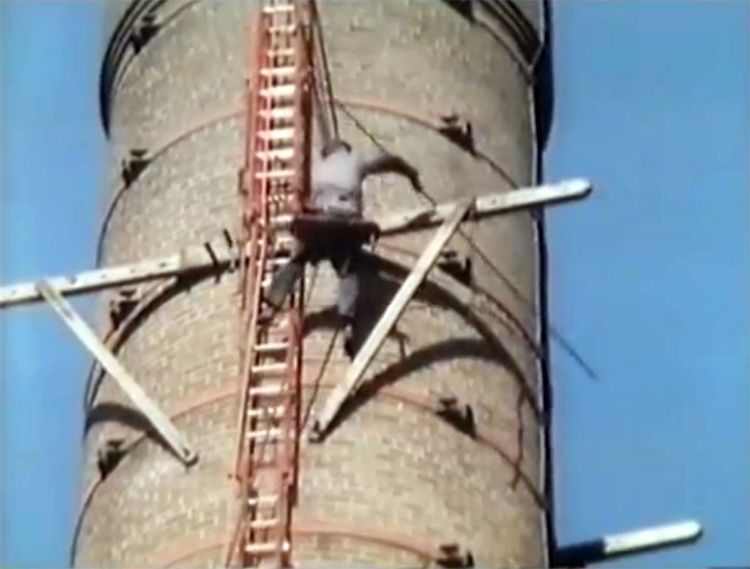
Fred was 40 or so when his career as a Bolton steeplejack brought him into an unlikely TV celebrity. As I’m typing this I’m watching the hard-drinking chain smoking Fred, working in the snow, with Donald, his tee-total sidekick, discussing other lesser steeplejacks and his distaste for the be-suited insurance men, as they prep a chimney for destruction.
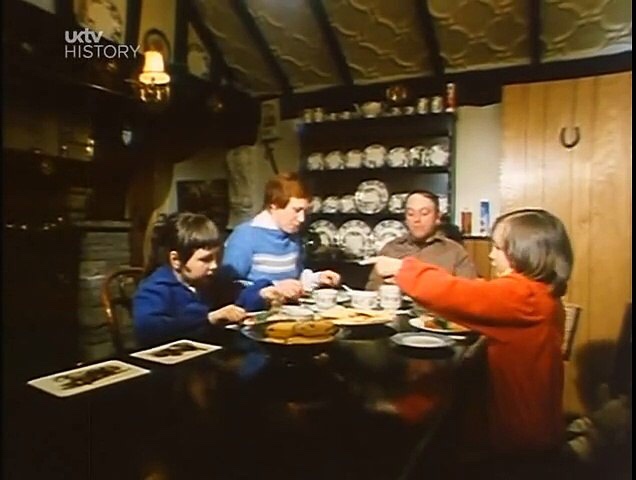
Dibnah family life (Mk I); Alison and the kids at table.
His chequered love life, or marital life, and his views on things like marriage and the ladies, etc, are very old school and traditional. And probably the most uncomfortable and awkward watching is seeing how Fred and his various wives ultimately fail to connect.
So, Fred is a very flawed man. To call him a ‘hero’ seems a bit odd. Not long before he died, Fred was made an MBE, and he was and still is beloved by many. Over time his career would shift from the manual work of jobbing steeplejack to presenting the numerous TV series he made later in his life, which eloquently attest to his passion for historical engineering.
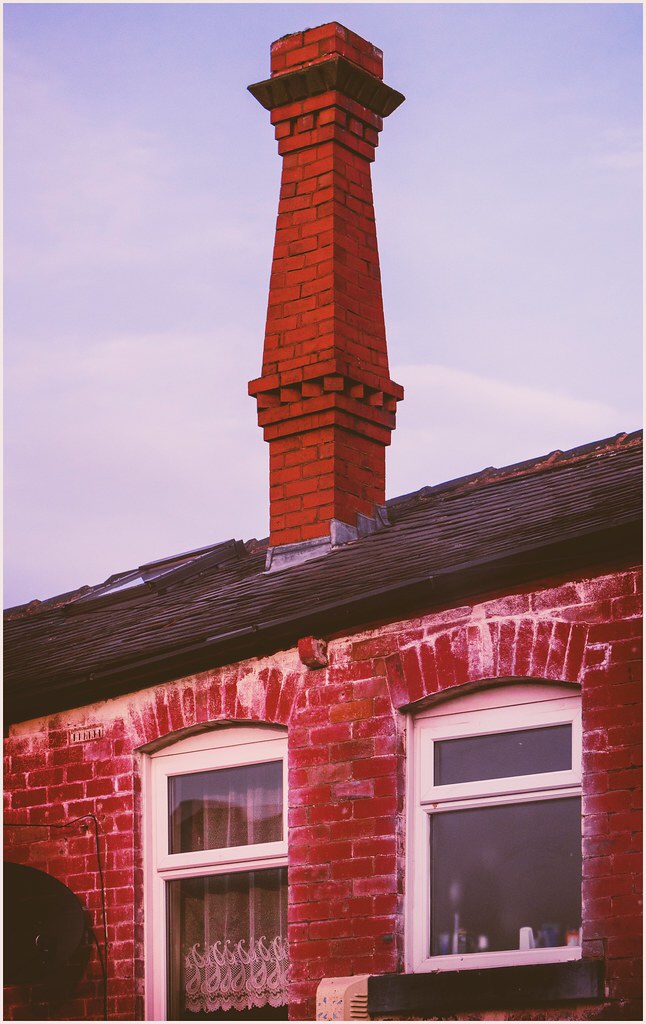
The chimney Fred built, aged 17, at his mother’s home.
Learning that he had a stint at art school, and seeing the chimney be built for his mother’s home – you might think she’d be proud, but she seems to disapprove and view it as an annoyance! – all these things about his formative years are fascinating. His mother’s a cold and pretty miserable fish! Perhaps his troubles with women have some roots in this relationship?
In the end Fred’s hardworking boozing and all those fags caught up with him. It’s sad that such an industrious intelligent hardworking man should die before his time. No doubt he still had a lot more to do and to give.
Fred finally got his ‘half day out with the undertaker’.
And what if any legacy has he left? Certainly he was very popular. And perhaps he’s helped bring new blood into the fold, as far as wanting to keep some of the ‘old ways’ going? His own property and his collection of gear has had a chequered life since it’s creator’s death. I’m not sure if any of it still stands?
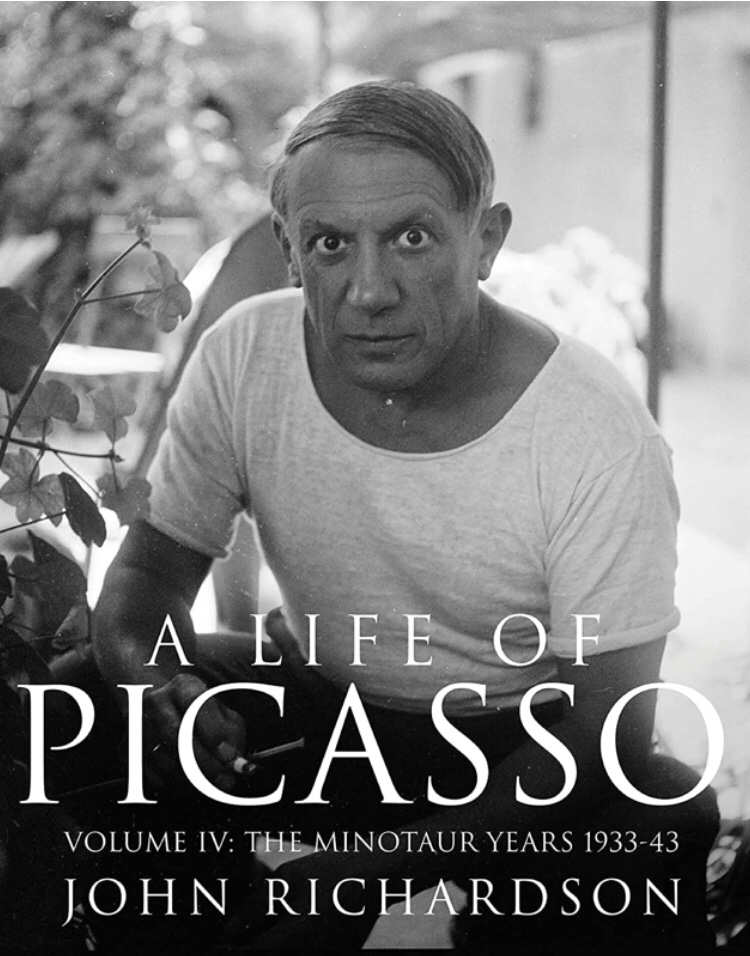
Isn’t it funny how sometimes things occur with a fortuitous synchronicity? Only yesterday I posted about Josep Palau i Fabre’s series of books on Picasso, and I happened to refer, in that post, to the fact that both authors – engaged in exhaustive documentation of Picasso’s life/works – i Fabre and John Richardson, seemed to have stalled around parts three or four.
And, right after I post this, I learn that Richardson’s fourth volume of his very detailed Life of Picasso – of which series I have the first three volumes (and have so far read the first two) – is due out very soon. April 7th, this year, to be precise.
Well, well, well… three holes in the ground, as my ol’ dad used to say!
It’s coming up to 7am, the night after my pal Dan’s 50th birthday party. After a few hours sleep, I’m awake again, and not likely to get back to sleep for a while. So I decided to add a few more of my book reviews to Good Reads.
My first extravagant art book acquisition.
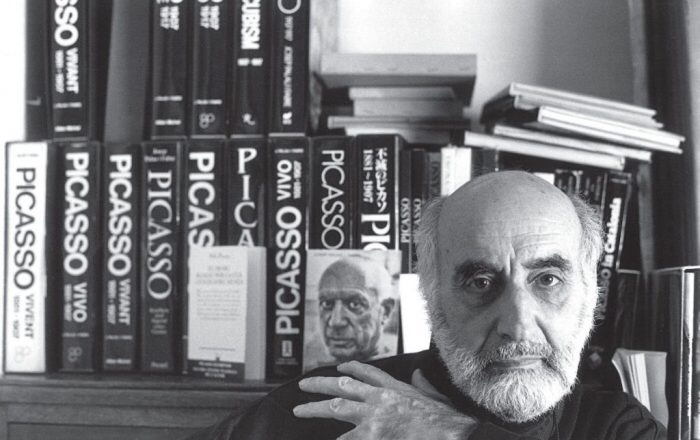
Two of the additions were titles by Catalan writer, poet and Picasso expert Josep Palau i Fabre (read more on him here). The first was my first plush art book purchase (pictured above), bought whilst still in my teens. The second (below) I bought many years later.
#2, a much more recent purchase.
And tonight, whilst doing the reviews and unable to sleep, I ordered, via Amazon, i Fabre’s third in the series, Picasso: From the Ballets to Drama, 1917-1926.
Was i Fabre planning to cover Picasso’s whole life, ultimately? I’ve found another title, possibly the next in such a series. But, rather oddly, there’s no mention of any such book on the Wikipedia page about his life and works I’ve linked to above.
And most recently, ordered tonight, #3.
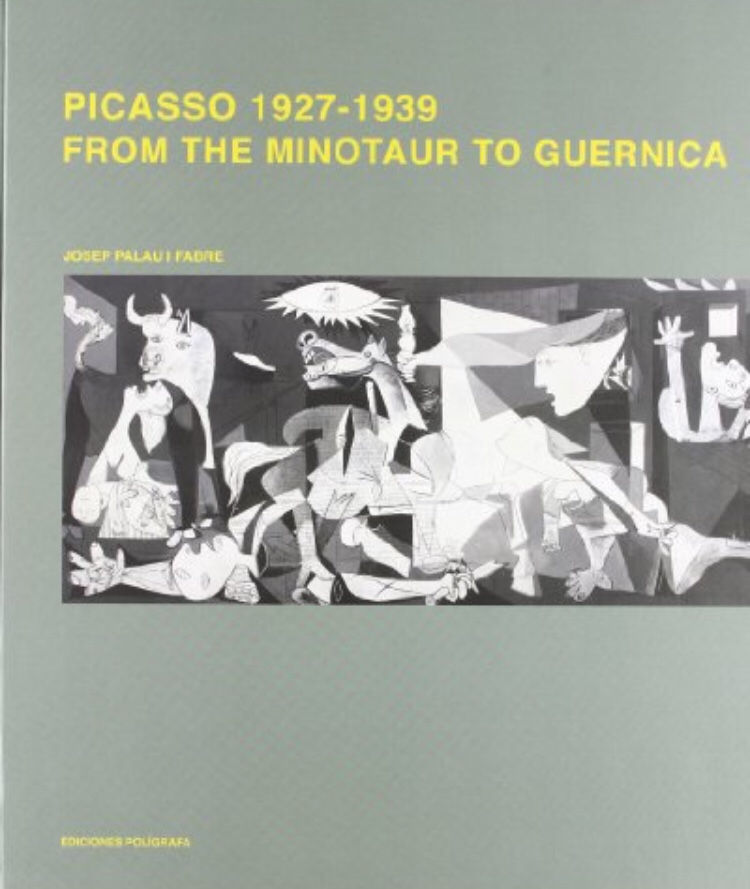
Whatever his plans and ambitions may have been in this respect (and the writings of John Richardson, also on Picasso, spring to mind in this connection), i Fabre died in 2008, aged 90, not having got further – in terms of the chronological catalogue raisonne type works – than either this, or the possible sequel, Picasso: From Minotour To Guernica 1927-1939.
So far I have just the first two volumes, both big fat chunky hardbacks, The Early Years, 1881-1907, and Cubism, 1907-1917, purchased many years apart. Having ordered number three in the series, Ballets & Drama, 1917-1926 – at a very reasonable £27.75 (inc. postage!) – I’m very excited at the prospect of both enlarging my collection and, best of all, perusing all the artworks.
Currently out of my price range… #4.
I’d get the next one, as well, if I could find it at an affordable price. The cheapest copy on Amazon UK when I made my most recent order was priced at £220! I think I’ll try shopping around a bit. Mind you, the three copies listed on Abebooks.com right now range from £360 to £1,400! Making the initially exorbitant £220 seem quite reasonable!
If I’m honest the textual content, whilst of interest, is a distant second to the images. Like a lot of art history or related literature, the texts of the two I have are hardly the main selling point, for me; rather hagiographic, and a bit lumpen – is this partly the translation? (I’m not in a rush to read his poetry!) – I do dip into it.
But the pictorial content, Picasso’s work, is what it’s all about for me.
The only medicine ‘mad dog’ Putin will understand.
Shit! Vlad’ is clearly mad!
He’s so far gone he can go on TV, knowing the entire world will see and hear him, and call the democratically elected leader of Ukraine, who is – according to German news channel DW (where I heard it first) and Wikipedia – Jewish, a Nazi, or neo-Nazi. Fucking mad!
Zelensky’s grandfather, Zemyon, fought the Nazi’s in Russia’s contribution to WWII, and lost his father and three brothers in the Holocaust. Putin, you’re a barking mad lunatic!
It seems pretty clear to me that he’s totally mad. A rabid dog, that ought to be put down. Why should the grunts and civilians die because Putin is trying to live out a Czarist/Soviet fantasy?
The current threat to world peace is, to my mind, greater than that posed by Osama Bin Laden. we could countenance offing him. Why not Putin? It’s obvious, of course. Putin has the military and espionage might of one of the world’s – no, sorry, the world’s mightiest nuclear super-power – at his back.